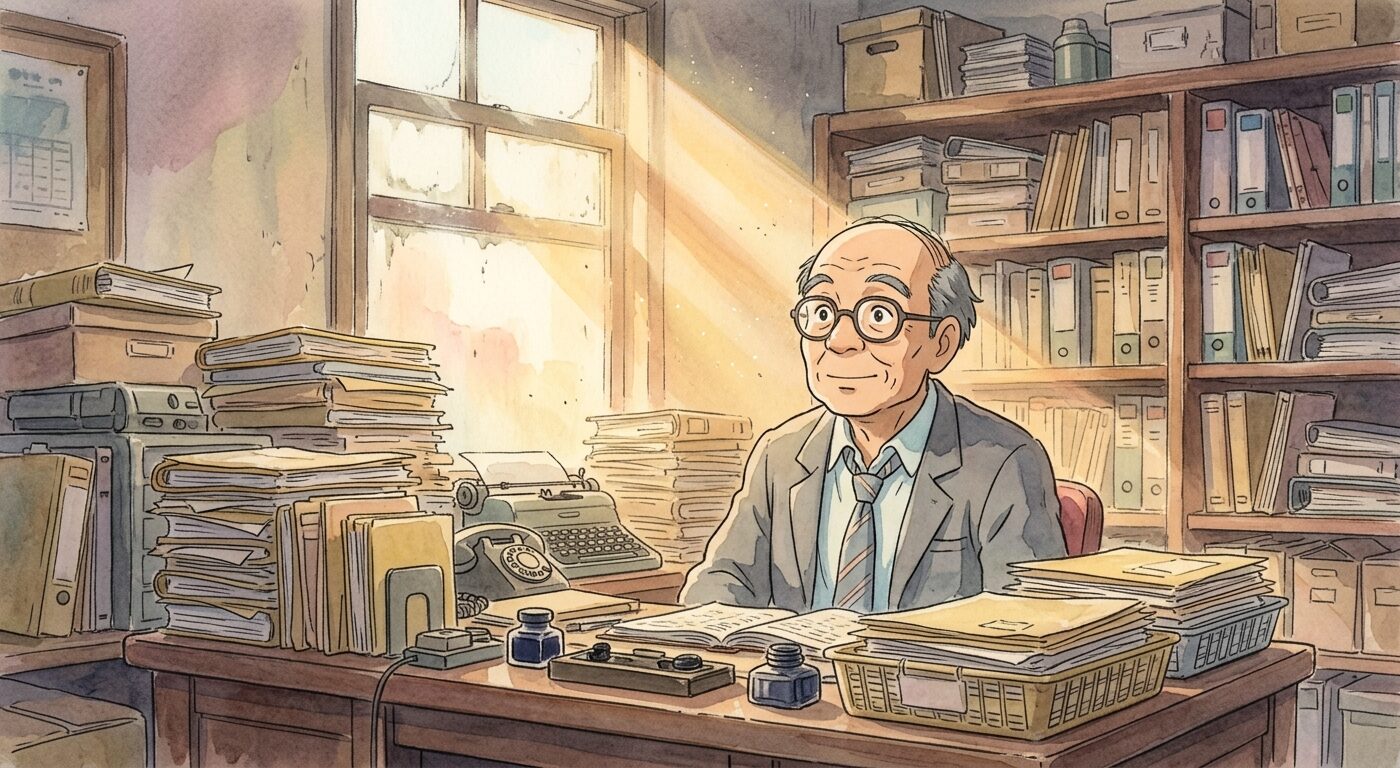
The Department of Historic Edible Crop Regulation, established in 1897 and functionally obsolete since 1903, was Ishwar Das’s personal, dust-choked mausoleum. For forty years, he had been a Junior Document Verification Officer, his days a steady rhythm of stamping forms that pertained to crops no longer grown, and regulations long forgotten. His office, a cubbyhole just off Corridor G-7, smelled of decaying paper and boiled cabbage from the cafeteria two floors down. Ishwar, a short East Asian man in his early 60s with a balding pate, thick spectacles perched precariously on his nose, and dressed in a faded, slightly too-large grey suit, considered himself a curator of irrelevance.
One Tuesday, amidst a stack of “Pre-Federation Turnip Yield Summaries,” Ishwar found it. Form 7B: “Authorization for Pre-Interregnum Radish Subsidy.” It was a genuine, albeit deeply anachronistic, document from 1902, signed by a long-dead Deputy Undersecretary. The form itself wasn’t the problem; it was the attached addendum, a hastily scrawled note from a junior clerk in 1903 stating, “Never officially rescinded due to oversight re: inter-departmental memo routing during the Great Drought Paper Shortage.” Ishwar blinked. This meant that, technically, the Pre-Interregnum Radish Subsidy was still active.
He chuckled, a dry rattle in his throat. A subsidy for a radish that had gone extinct with the “Interregnum” – a period whose historical significance was now limited to the Department’s internal filing system. He imagined some bewildered farmer in 2024 attempting to claim funds for a radish that existed only in botanical textbooks. The sheer, glorious pointlessness of it brought a rare smile to his face.
“Mr. Das, a word?”
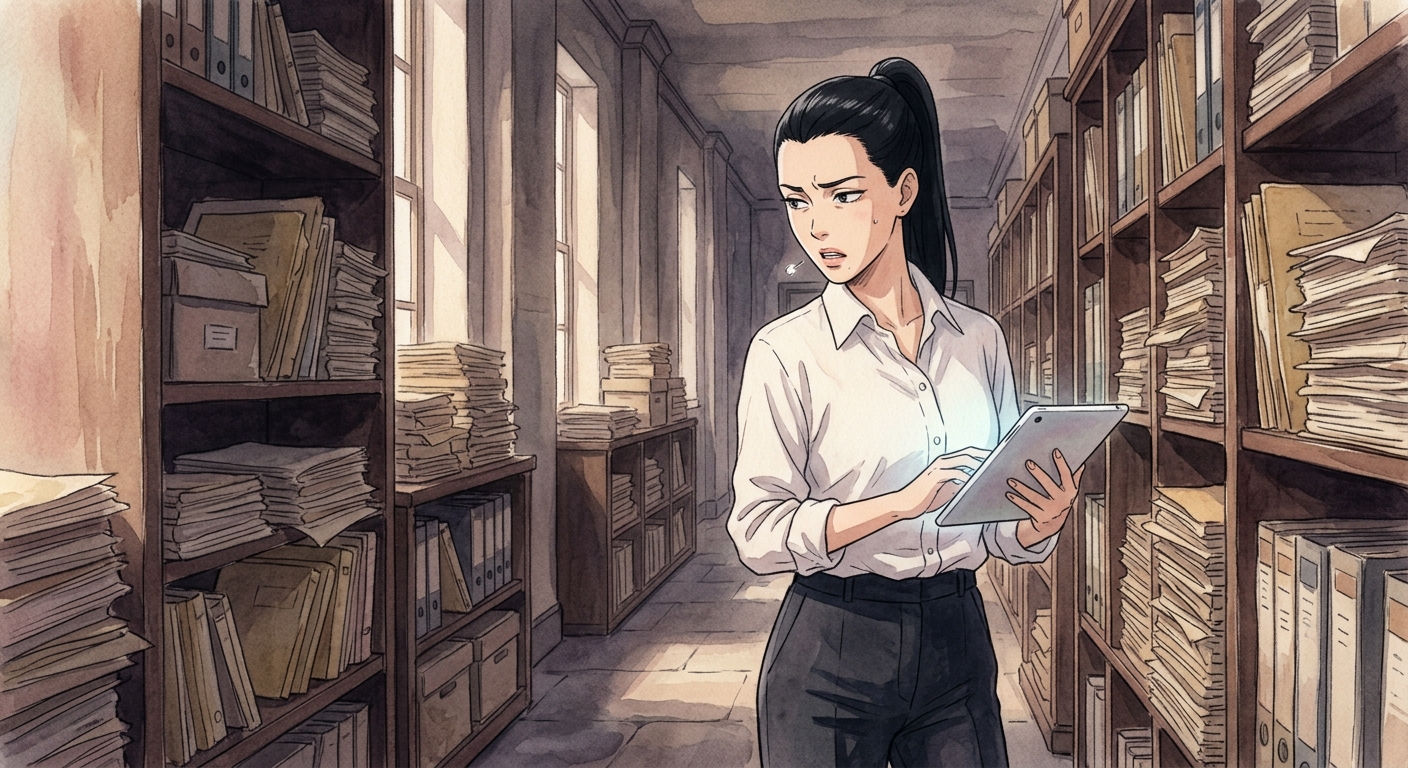
The voice was crisp, like starched linen, and belonged to Reena Kohli, a mid-30s woman with sharp features, hair pulled back in a severe ponytail, and clad in a pristine white shirt and dark trousers, carrying a slim, modern tablet. She was a Compliance Auditor, fresh from the central office, wielding a slim, modern tablet like a weapon. Ishwar had learned to fear the tablet.
“Good morning, Ms. Kohli,” Ishwar said, carefully placing Form 7B face down.
“I’m investigating a minor anomaly in your department’s ledger,” she began, her gaze sweeping over his paper-strewn desk like a laser. “A recurring—or rather, non-ceasing—allocation for something called ‘Pre-Interregnum Crop Sustainability’. It seems to tie into a dormant agricultural fund that’s been accruing nominal interest for… over a century.”
Ishwar’s blood ran cold, then lukewarm, then a little amused. She’d found it. The radish.
“Ah, yes,” Ishwar mused, leaning back in his creaking chair, a cloud of dust puffing from the upholstery. “A historical oddity, I assure you. A clerical oversight from before the Great War. Harmless.”
“Harmless?” Reena’s voice tightened. “Mr. Das, this is a line item. An expenditure, however small, that has never been properly closed. It suggests systemic issues with your department’s record-keeping integrity.” She tapped her tablet. “My audit algorithm flagged it as a potential gateway to larger budgetary discrepancies. We need to trace this back, understand why it wasn’t rescinded, and close it.”
Ishwar felt a familiar weariness settle over him, heavy as the dust motes dancing in the faint light from the window. Closing the Pre-Interregnum Radish Subsidy was not just about finding a form. It was about proving its extinction (which required historical botanical reports), justifying the original oversight (which meant digging through Great Drought-era memos), and then navigating the labyrinthine process of a “Post-Historic Crop De-Subsidization Rescission Order,” which alone had eleven sub-forms. The bureaucratic effort would dwarf the negligible financial sum involved.
He looked at Reena, so earnest in her pursuit of order amidst the beautiful, sprawling chaos of the Department. He looked at Form 7B, the relic of a forgotten past. And then, a tiny, mischievous spark ignited behind his weary eyes.
“Indeed, Ms. Kohli,” he said, a glint in his eye. “Systemic issues. Perhaps even… a conspiracy of neglect.” He picked up Form 7B. “And the original addendum states it was never officially rescinded due to an oversight. But what if… what if the oversight was not the failure to rescind it, but the failure to activate it properly?”
Reena blinked. “Activate it? Mr. Das, it’s a radish subsidy from 1902!”
“Precisely,” Ishwar replied, his voice taking on a sudden, uncharacteristic authority. “The intention was clearly there. The paperwork was in place. It merely lacked the final, formal activation stamp. An administrative lacuna, if you will.” He pulled out a dusty red ink pad and a rubber stamp he hadn’t used in decades. It read: “PROCESSED – FINAL APPROVAL.”
Reena stared, aghast, as Ishwar brought the stamp down with a resounding thump on Form 7B, right next to the 1903 addendum.
“There,” he declared, pushing the form across his desk. “Activated. Now, it can be properly processed for rescission.” The logic was impeccable, absurdly so. He had just officially launched a century-old subsidy for an extinct radish.
“Mr. Das, you… you can’t simply activate a defunct subsidy! This will trigger a departmental review! The Central Ministry will be involved!”
Ishwar merely smiled, a broad, genuine smile that hadn’t graced his face in years. He stood up, adjusted his suit jacket, and walked towards the door of his cubbyhole, leaving the stunned auditor and the activated radish form behind.
“My dear Ms. Kohli,” he called over his shoulder, stepping out into the dim, endless corridor. “After forty years of dormancy, even a radish deserves its day. My work here, I believe, is finally done.” He walked away, the scent of boiled cabbage and old paper fading behind him, the sound of bureaucratic panic already beginning to echo faintly through the labyrinthine halls. He had finally, gloriously, retired.


What did you think?
Reader Thoughts
No thoughts yet. Be the first to share yours.
Join the conversation
Log in or create a free account to share your thoughts on this story.