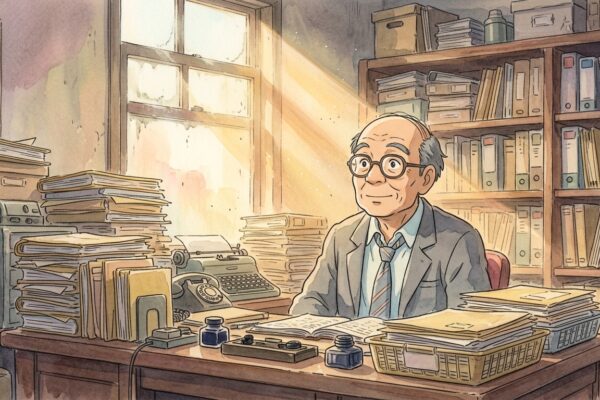
My official designation, Senior Ephemeral Disposal Analyst, sounded rather grand for a man whose daily routine involved cataloguing the city’s discarded sentiment. In the Municipal Department of Ephemeral Disposal (MDED), located deep within Aethelburg’s administrative catacombs, we managed the intangible: forgotten resolutions, abandoned passions, half-formed ideas, collective anxieties. It was essential work, if depressing.
Each morning, a fresh batch of ‘items’ arrived. They weren’t physical, of course. They manifested as shimmering, barely-there vibrations in the intake chamber, faint echoes of what the city had shed. My job was to identify, classify, and register them into the Great Ledger of Receding Ripples. Most were easy: a desiccated ‘New Year’s Fitness Resolution, 2017’ (Class D, Sporadic Re-emergence Risk), a faded ‘Passion for Bonsai, Unfulfilled’ (Class B, Low Transmission Potential). Standard fare.
Today, however, a peculiar ripple pulsed in the chamber, stronger than most, yet resistant to classification. It felt… communal. A vague, persistent hum of joy, quickly followed by a pang of loss. I consulted the diagnostic tools. “Anomaly: Collective Memory Fragment,” the screen blinked. “Subject: Large Ornamental Water Feature.” The system struggled with further details.
I’d never seen anything like it. Aethelburg had many fountains, but none that evoked such a potent, shared sense of wistful fondness, then abrupt erasure. This felt different from the usual, slow decay of personal hopes. This was a deliberate forgetting, a collective blind spot.
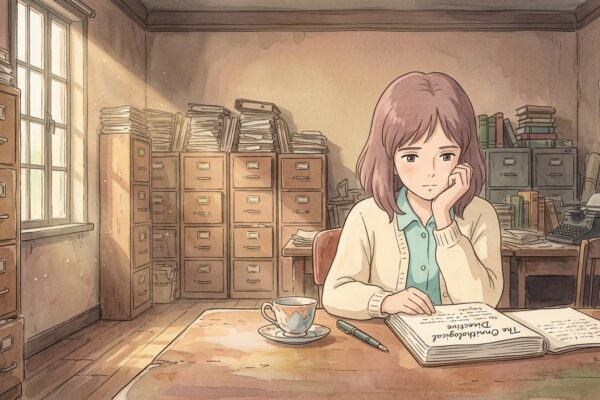
Kainaat, my junior clerk, peered over my shoulder. She was new, full of the bright-eyed curiosity that time in the MDED would surely extinguish. “What’s that one, Mr. Sunderji? It feels… big.”
I tapped the screen. “A ‘Fountain of Perpetual Joy,’ it seems. Or rather, the memory of one. And the subsequent absence of that memory. The system is trying to file it under ‘Urban Development Failures, Historic’ but it’s resisting. Refuses to settle. Most uncooperative.”
“But… a fountain? Don’t we have plenty? Why would anyone forget one?”
I sighed, a sound that had become a permanent resident in my throat. “Because the city prefers its forgettings to be permanent, Kainaat. And sometimes, they are. Usually. This one, though, is… recalcitrant.”
I spent the better part of the morning wrestling with the ‘Fountain of Perpetual Joy.’ It buzzed softly, a vestigial thrum against the sterile hum of the office. It tried to project images into my mind: laughing children, lovers meeting, sunlight glinting off cascading water. Then, just as quickly, the image would shatter, replaced by the turgid, official documentation of its demolition, dated decades ago. A swift, silent act of civic amnesia.
The memory wasn’t just lost; it was actively suppressed. This wasn’t an ephemeral disposal; it was an active policing of the liminal space between recollection and oblivion. My usual cynical detachment wavered. This ripple was an accusation, a tiny tear in the fabric of Aethelburg’s carefully constructed narrative.
Finally, I logged it under a provisional code: ‘Unforeseen Resurgence, Type Alpha. Potential for Insidious Contagion.’ Kainaat’s eyes widened when she saw the entry. Her expression was peculiar – not just surprised, but almost… knowing. As if she’d felt a resonance too, a faint echo of the forgotten joy.
I closed the file, the phantom ripple still a soft vibration at the edge of my awareness. The office was quiet again, the shelves groaning under the weight of decades of discarded sentiment. But the ‘Fountain of Perpetual Joy’ had left a residue. I found myself staring out the rain-streaked window, past the grimy cityscape, searching for a ghost of something I’d never known. The process of forgetting, it seemed, was never truly complete. Sometimes, it merely waited for someone to remember to forget it properly.



What did you think?
Reader Thoughts
No thoughts yet. Be the first to share yours.
Join the conversation
Log in or create a free account to share your thoughts on this story.