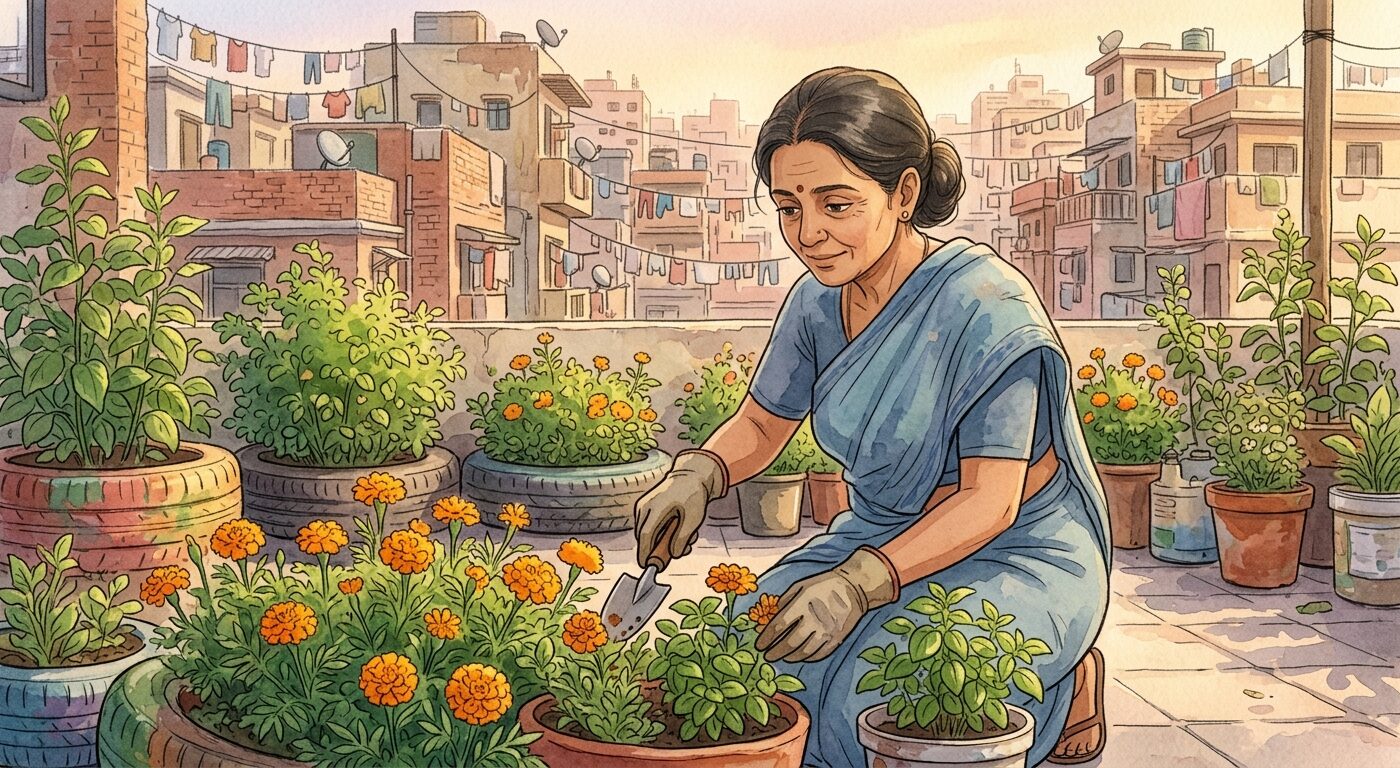
The rooftop garden, perched precariously above the din of Lakshmi Street, was Priya’s quiet rebellion against the city’s relentless grey, a tiny universe she had willed into being. Each morning, before the sun fully asserted itself above the jagged skyline of glass and concrete, Priya ascended the five flights of narrow, creaking stairs. Her calloused hands, accustomed to the rhythmic push and pull of stitching machines at the garment factory, now moved with a different, tender rhythm among the soil and leaves.
Marigolds, their petals a riot of saffron and gold, bloomed in repurposed terracotta pots and old tires. Basil, its scent a sweet, peppery memory of home, struggled valiantly in a cracked ceramic basin. She spoke to them, soft murmurs in a language Rohan, her fifteen-year-old son, barely understood. It was a language of roots, of patient growth, of fierce tenacity.
Today, a patch of struggling basil needed her attention. Its leaves, usually a deep emerald, were tinged with a faint yellow, a silent protest against the city’s dry winds. Priya knelt, her sari pooling around her, and began to loosen the compacted soil with a small, rusted trowel. The cacophony of the city below – hawkers’ cries, blaring horns, the distant rumble of the subway – faded into a distant hum.
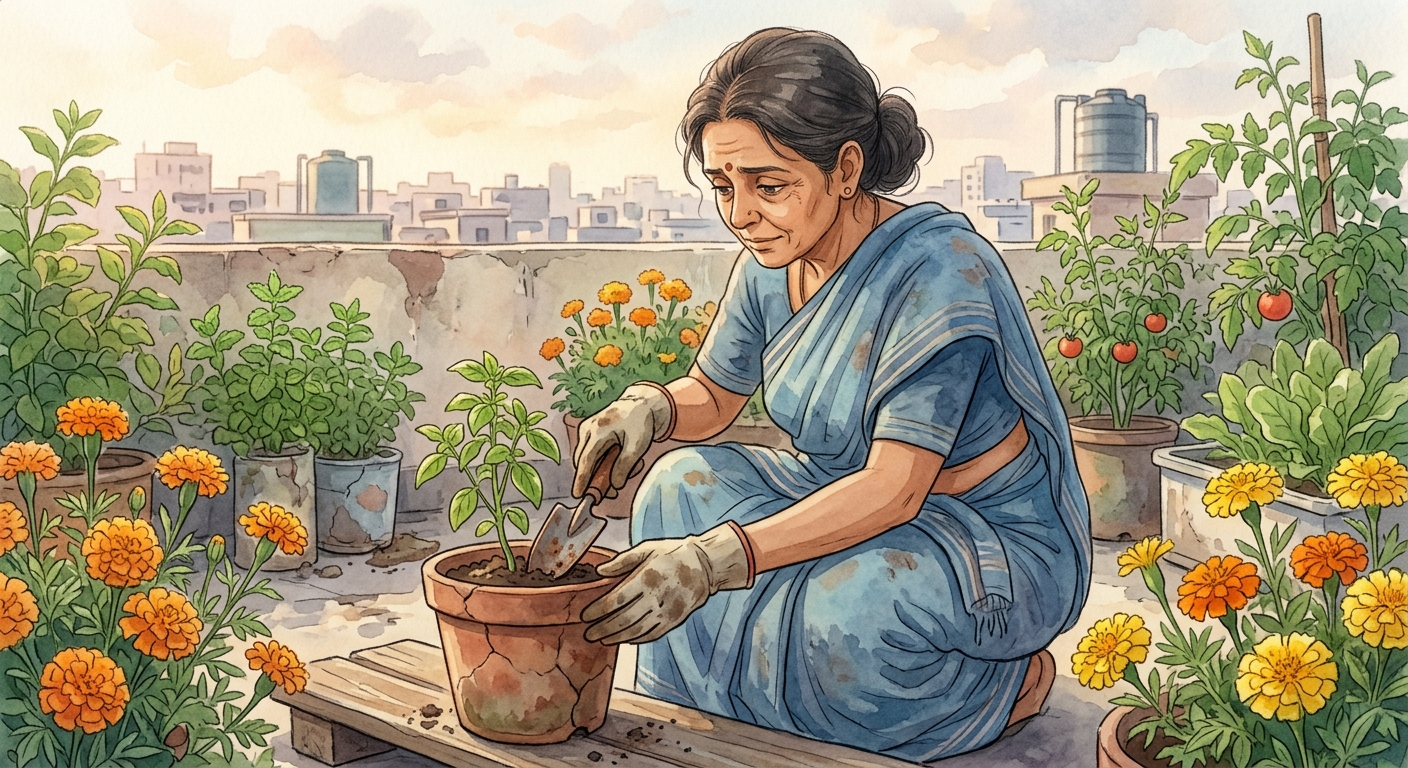
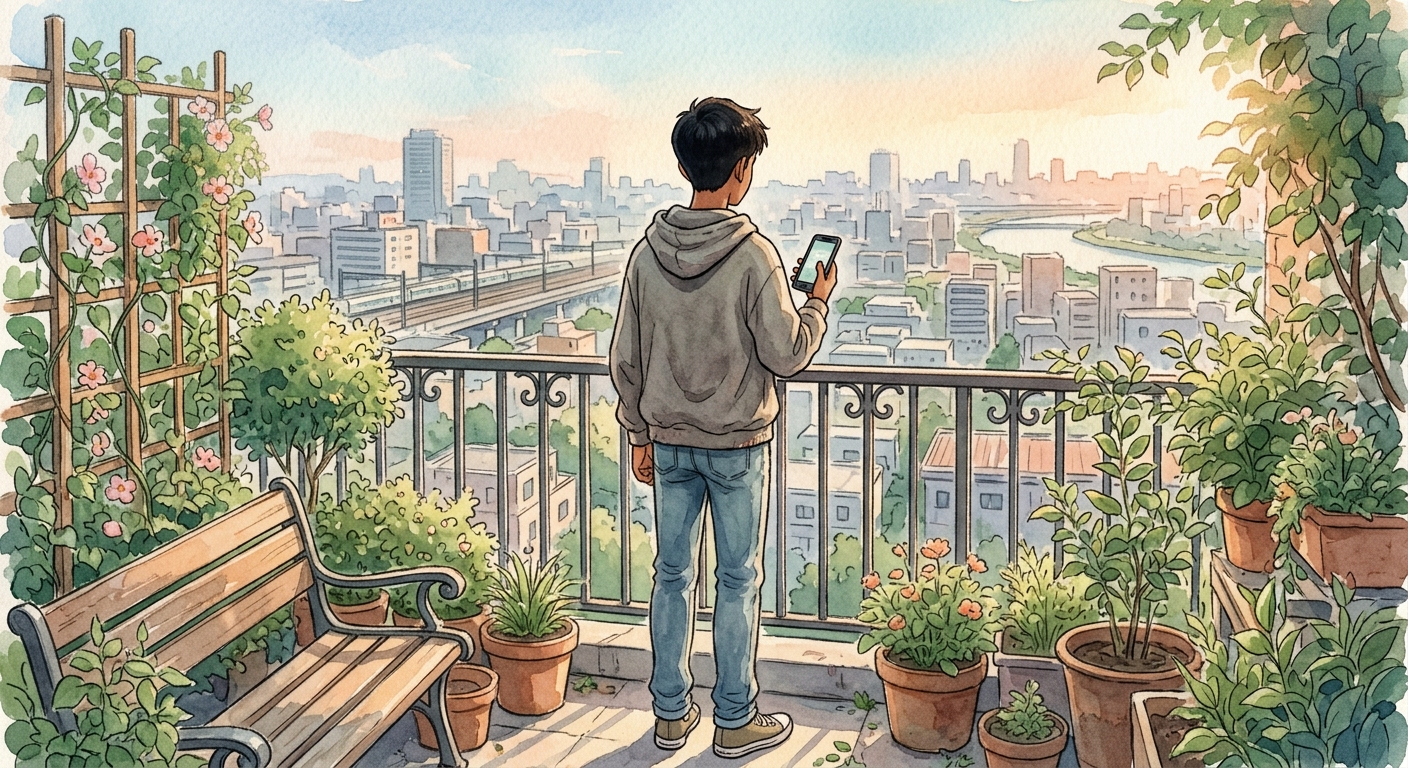
This garden was more than just plants; it was a fragment of the village she’d left behind, a living, breathing connection to the stories her grandmother used to tell. Each bloom, each fragrant leaf, unfurled not just from the seed, but from a memory, a hope that something vital could be preserved. Rohan, however, found his vitality elsewhere. His world was the glowing screen of his phone, the rapid-fire English slang of his friends, the thumping bass of music from apartments nearby.
Just then, the rooftop door creaked open. Rohan emerged, his lean figure silhouetted against the morning light, his face still soft with sleep. He carried a half-eaten toast, his smartphone already alive in his hand. He glanced at her, then at the marigolds, a fleeting acknowledgement of her presence before his gaze drifted to the city’s edge.
“Amma, I’m going to the park with Sameer,” he said, his voice a little muffled by the toast. “Be back for lunch.”
“Wait,” Priya said, her voice softer than she intended, a hint of plea she immediately regretted. “Help me with this basil. It needs new soil.”
He chewed slowly. “Can’t, Amma. Sameer’s waiting. And… plants are boring.”
He didn’t mean to hurt her, she knew. He was simply stating a truth that felt as hard and unyielding as the concrete beneath their feet. He saw dirt; she saw an inheritance. He saw a chore; she saw a ritual. The basil, now freed from its compacted earth, seemed to sag even more.
Priya watched him go, the closing door a thud against her chest. She had tried, in countless small ways, to bridge the divide. She’d cooked his favorite dishes, meticulously recreated from faded recipes, only for him to prefer the greasy takeout from the corner shop. She’d told him tales of their ancestors, of brave queens and clever farmers, but his eyes would glaze over, drawn back to the endless scroll of his phone.
She returned to the basil, her fingers working with renewed resolve. This was her language, her connection. If Rohan would not speak it, she would keep it alive for him, for herself, for the memory of those who came before. She fetched a small bag of nutrient-rich compost, mixing it with the old soil, her movements precise and nurturing. She whispered a prayer, a plea for strength, for understanding.
Hours later, the sun high and hot, the basil stood a little taller, its leaves still yellowed, but now surrounded by dark, rich earth. Priya wiped the sweat from her brow with the back of her gloved hand. She stood, stretching her aching back, and looked out over the city. It stretched endlessly, a formidable, indifferent beast. But here, on her small rooftop, a patch of green stubbornly thrived.
Just as she was about to descend, Rohan reappeared. He hadn’t noticed the subtle change in the basil, his eyes still glued to his screen, but he stopped by the edge of the marigold patch. His fingers, almost unconsciously, brushed against a resplendent orange bloom. For a fleeting moment, a connection, invisible but palpable, passed between mother and son, between soil and screen. He didn’t say anything, but the gesture, small as it was, felt like a promise unfurled in the dry city air.
“Amma,” he said, looking up, finally meeting her gaze. “They smell good.”
Priya smiled, a gentle, weary smile that reached her eyes. It was a tiny victory, a single marigold blooming in the vast, indifferent urban sprawl. But it was enough. For now, it was enough. She had planted not just seeds, but patience, and in the quiet tenacity of her garden, she found solace, and a quiet, enduring hope.

What did you think?
Reader Thoughts
No thoughts yet. Be the first to share yours.
Join the conversation
Log in or create a free account to share your thoughts on this story.