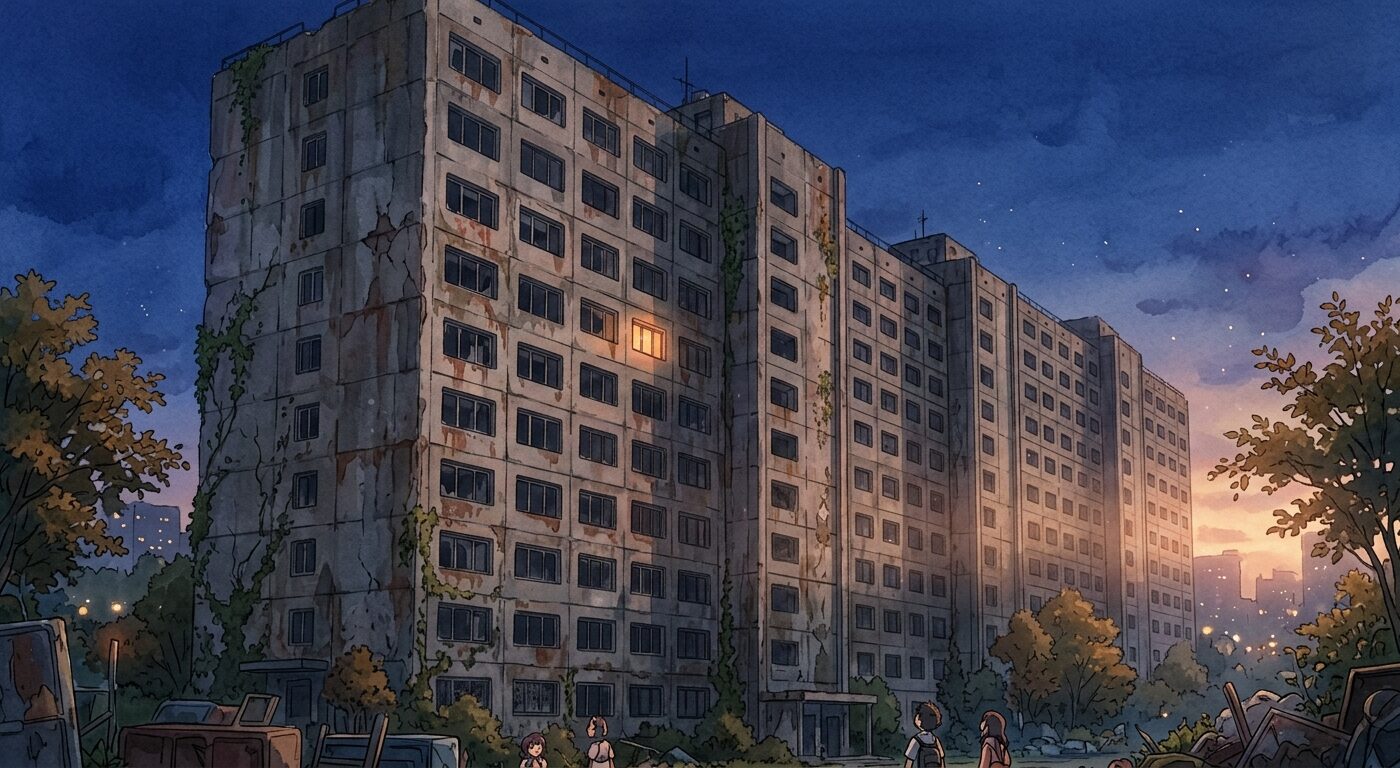
The Iron Hive, my home for seventy-eight years, was humming its last, discordant song, each tremor in the concrete foundations a farewell note. They said it was progress, a new skyscraper to pierce the clouds, but to me, it was simply the city swallowing its own history, brick by agonizing brick. I was the last one left on the eleventh floor, a stubborn knot in the thread of their grand design, clinging to apartment 11B like a limpet to a rock face.
The scent of damp concrete and pulverized plaster had replaced the familiar aroma of turmeric and cardamom that once wafted from kitchens up and down the building. Doors stood ajar, revealing empty shells where lives had unfolded: faded wallpaper patterns like ghosts, a child’s height marked in pencil on a doorframe, a single, chipped teacup left on a kitchen counter, a silent testament to a hasty departure. I walked those empty hallways like a curator of a vanishing museum, tracing the faint impressions left by countless feet on the scuffed linoleum.
Every morning, the distant growl of the excavators began, a monstrous stomach rumbling for its next meal. My tea, brewed in the same dented kettle since my wedding day, rattled faintly in its chipped cup. The vibrations were a constant companion, shaking loose memories from the walls, making the old photographs on my dresser shiver with silent laughter and forgotten grief. I would sit by the window, watching the city below, a sprawling, indifferent beast that consumed its past with an insatiable hunger.
My own apartment remained a small, defiant island. My plants, mostly resilient money plants and hardy snake plants, still thrived, their green a sharp contrast to the grey outside. I had stopped packing weeks ago. What could I truly take? Not the echoes of children’s laughter in the stairwell, not the low thrum of the building’s old elevator, not the secret solace of watching the monsoon rain lash against the windowpanes. Those things belonged to the Hive, and I, to them.
One afternoon, there was a tentative knock. It was Mr. Sharma, the young foreman, his hard hat a beacon of unwelcome order in my chaotic universe. “Mrs. Nala, are you alright? We’re starting on the north wing today. You’re truly the last resident, you know. We just want to make sure you’re safe.”
I opened the door only a crack, the scent of dust and something metallic—raw ambition, perhaps—wafting in. “Safe as anyone can be, Mr. Sharma, when their home is being eaten by a hungry machine.” My voice, a little rustier than I remembered, held no anger, only a quiet, unadorned endurance.
He shifted his weight, a clipboard clutched in his gloved hand. “We can help you with anything you need. Relocation assistance, packing, anything.” He spoke with a practiced kindness, a script he must have delivered a hundred times. I imagined his own home, sleek and new, free of the layers of other people’s lives that coated every surface here. “Thank you, Mr. Sharma,” I said, my voice softer now, “but some things cannot be packed. Some things, they cling to the very air.”
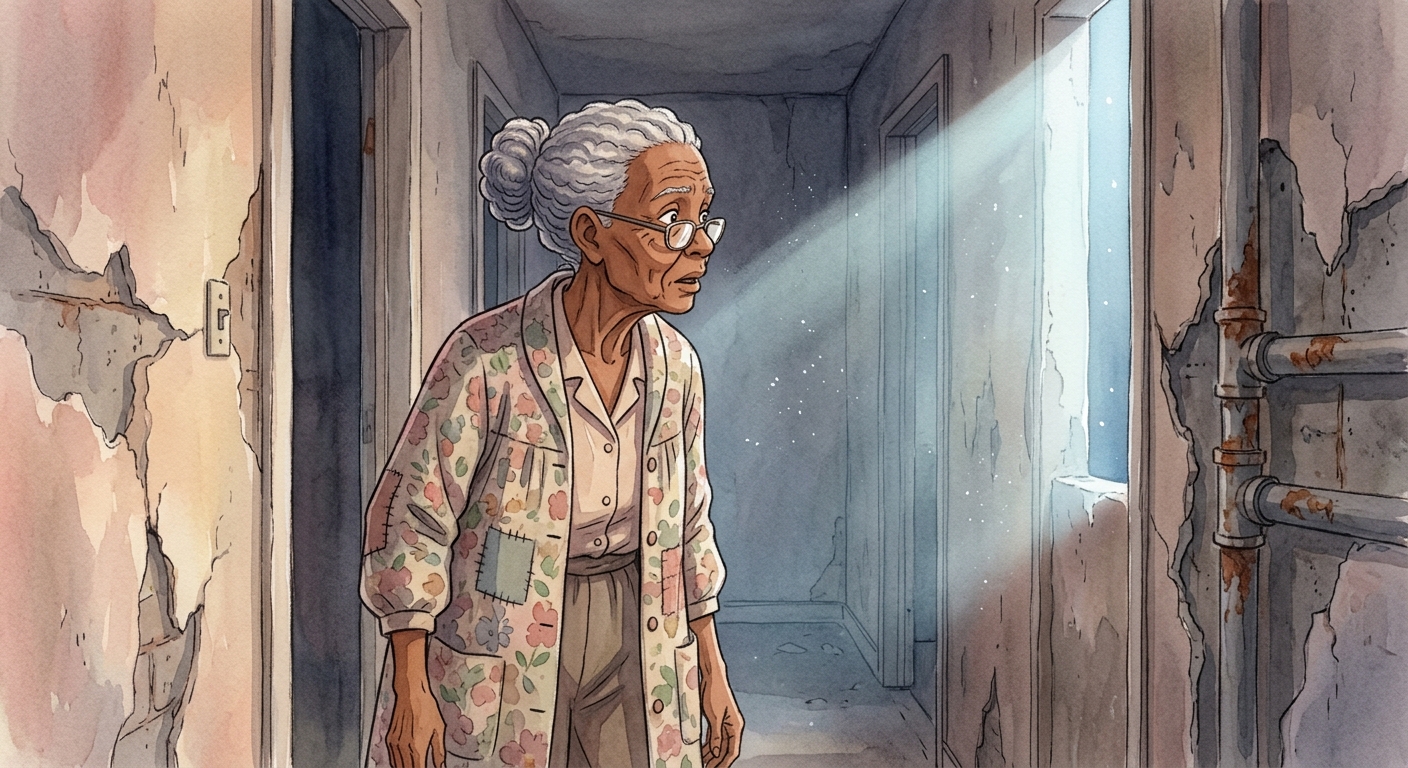
After he left, the silence in my apartment felt thicker, punctuated only by the distant crunch of concrete. That evening, as the last light bled from the sky, I found myself drawn to the far end of the hallway, past where the drywall had been torn away. There, exposed by the brutal hand of demolition, was a small, dusty alcove I’d never known existed. It had been sealed behind a false wall, an ancient secret in the heart of the Iron Hive. Moonlight, silver and thin, sliced through a gap in the facade, illuminating something within.
A small wooden box, unlacquered and plain, sat nestled in the debris. I reached for it, my fingers trembling slightly as they brushed against the rough wood. Inside, carefully wrapped in yellowed newspaper, was a collection of ephemera: a black-and-white photograph of a young couple, smiling shyly; a dried marigold garland, its petals brittle with age; a handwritten letter, its ink faded to a whisper. It was a fragment of another life, preserved in the very bones of the building. My breath hitched.
This wasn’t my memory, but it was *a* memory, one that the Iron Hive had guarded in its secret heart. The names on the letter were unfamiliar, the faces in the photograph strangers, yet I felt a profound connection. It was a tangible piece of the building’s soul, a story that refused to be silenced, tucked away for an unknown discoverer. It was proof that lives here had mattered, that love and hope and small joys had bloomed and faded within these very walls.
I carefully closed the box. I didn’t need to read the letter to understand. The hum of the Iron Hive suddenly changed in my ears; it was no longer just a death rattle, but a chorus, a symphony of all the quiet lives that had once filled its rooms. This box, this forgotten treasure, was a reminder that even when the physical structure falls, the stories, the invisible threads that connected us, would endure. They would simply find new places to reside, new hearts to carry their weight.
I walked back to my apartment, the box clutched to my chest. The wrecking ball would come, the dust would settle, and a new structure would rise, tall and gleaming and oblivious. But the Iron Hive would not truly be gone. It would live in the memory of those who had passed through its doors, in the very air I breathed, and now, in this small, wooden box. My heart, it was the Iron Hive’s heart, still beating, still humming, long after the last brick had fallen.
What did you think?
Reader Thoughts
No thoughts yet. Be the first to share yours.
Join the conversation
Log in or create a free account to share your thoughts on this story.