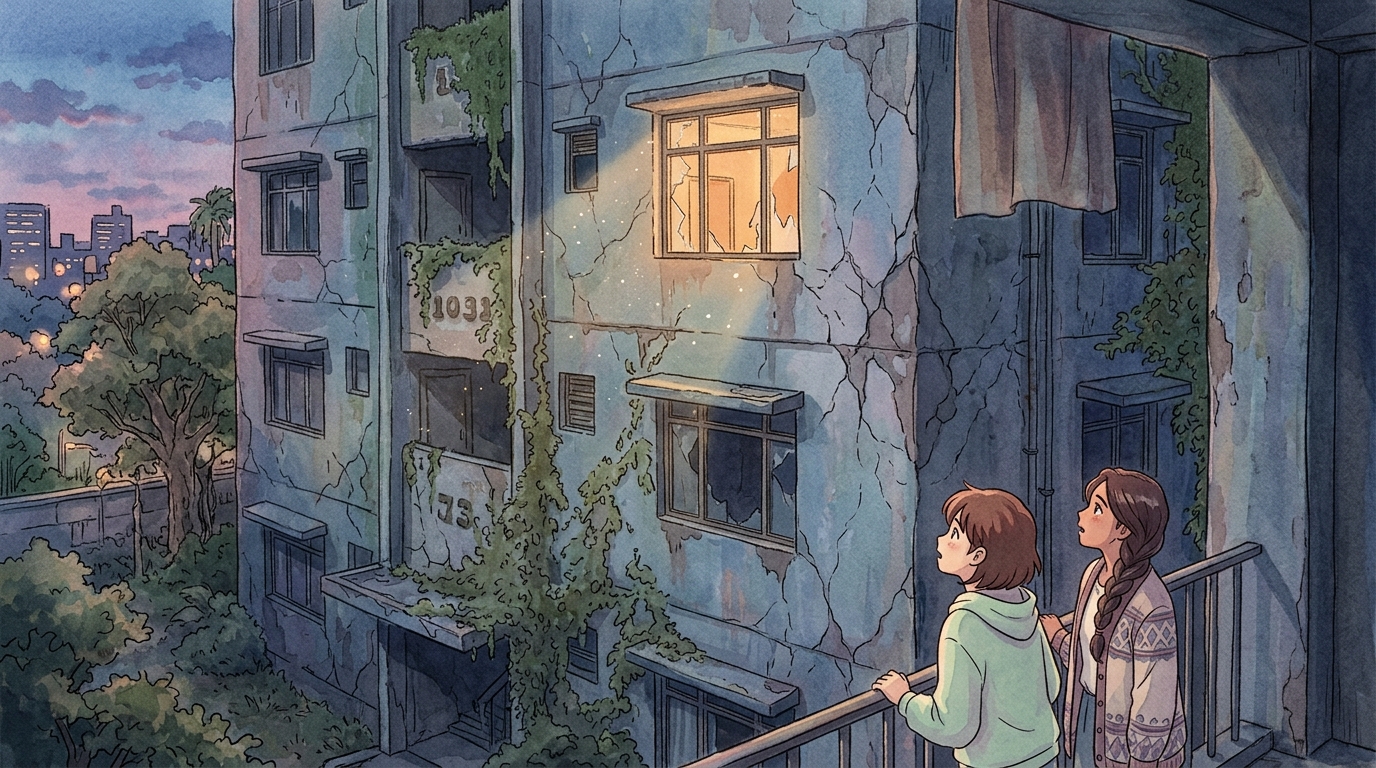
The first whisper came from the ceiling, a dry scuttering like rice spilled on rough burlap. Renuka Sharma, her fingers still stiff from a day spent untangling stubborn threads, paused her nightly chai ritual. She lived alone, the last stubborn tenant in the dilapidated Gulmohar Apartments, a building that coughed dust and shed plaster with every passing year. Above her, Apartment 4B had been vacant for decades, its door sealed by the grime of disuse.
She dismissed it as rats. Old buildings breathed rats. But the sound persisted, not a scurrying, but a deliberate, dragging friction, rhythmic and low. It was less like a rodent and more like… a heavy shawl being pulled across a bare floor, endlessly. Renuka gripped her chai cup, the porcelain cold against her palm. She closed her eyes, willing the sounds to cease, willing the silence to return to her solitude. It did not.
One evening, the dragging stopped. A new sound replaced it: a faint, mournful creak, like rusty hinges giving way. Then, a thud. Renuka flinched, chai sloshing over the rim of her cup. This wasn’t rats. This was something larger, something… falling. Her heart hammered against her ribs, a frantic bird trapped in a cage. She knew she should investigate, or at least call someone, but who? Her children lived in different cities, their visits sparse, their voices on the phone always tinged with a plea for her to “move somewhere safer, Ma.”
The silence that followed the thud was heavier than usual, thick with unseen dust and unanswered questions. Renuka spent the night huddled on her threadbare armchair, the dim light from the single bedside lamp casting long, distorted shadows across her collection of finished textiles – vibrant patterns now dulled by age, mirroring her own fading world. Sleep offered no escape; she dreamt of shadowy figures weaving tapestries of decay above her.
Days bled into a week. The sounds became a peculiar symphony. Not violent, not overtly threatening, but deeply unsettling. There was the dragging again, then the creak, followed by a lighter, softer thump, as if an old book had slipped from a shelf. Sometimes, a series of delicate, rhythmic clicks, like knitting needles. Renuka, a retired master of intricate embroidery, recognized the pattern. It sounded like someone was working up there. Weaving. But no one lived in 4B. No one could.
She finally climbed the creaking stairs, each step a protest against her own eighty years. The fourth-floor landing was shrouded in perpetual twilight, dust motes dancing in the slivers of light escaping through cracks in the boarded-up windows. The door to 4B, once a solid teak, was now peeling paint and warped wood, the original numbering obscured. A faint, almost imperceptible smell hung in the air – not decay, but something musty, ancient, like forgotten spices mixed with dried flowers. And underneath it all, a whisper of old threads.
Her hand, trembling slightly, reached for the doorknob. It was cold, metallic, and yielded with surprising ease. The lock, she realized, had simply rusted away. The door swung inward on soundless hinges, revealing a cavern of gloom. The apartment was vast, unfurnished, and choked with dust. Moonlight, filtering through a broken skylight, illuminated a single, central spot on the floor.
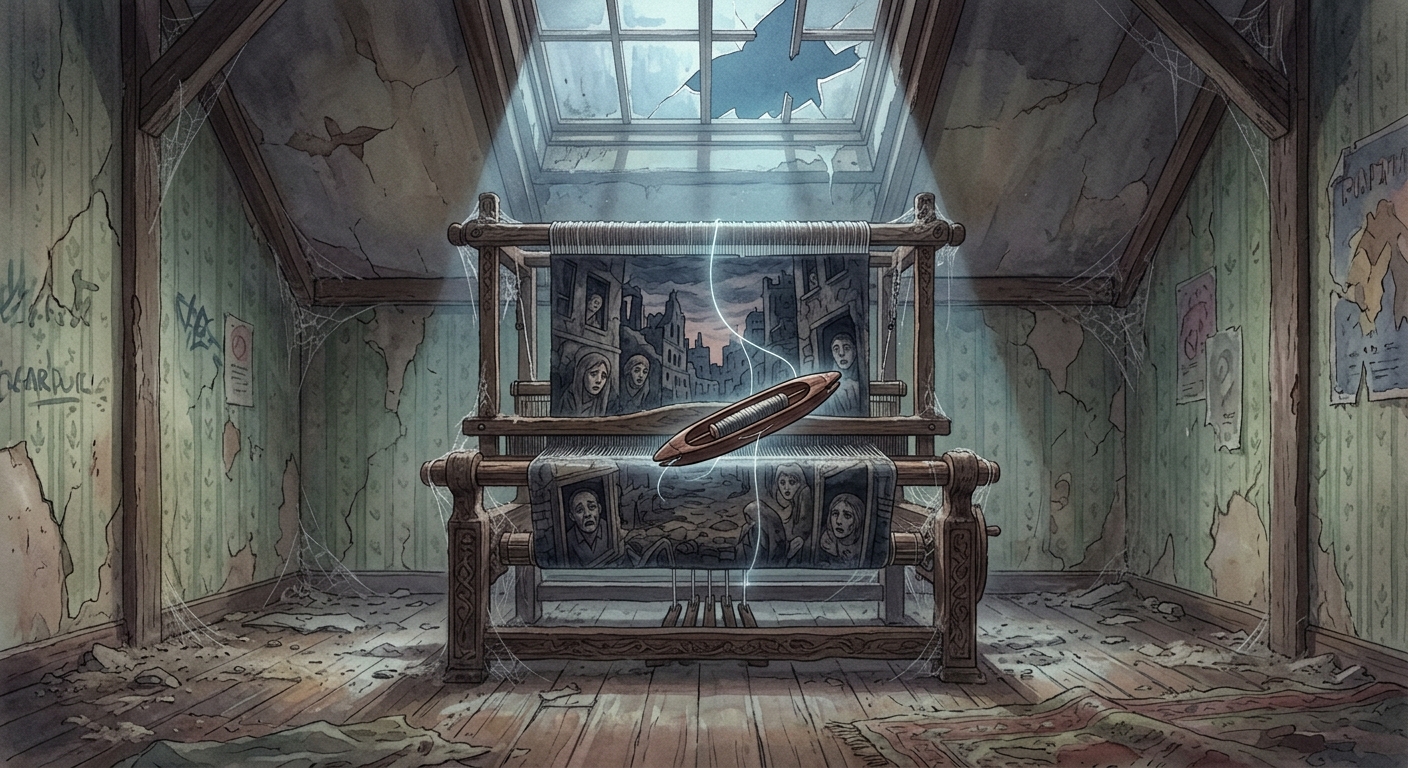
There it was. Not a person, not a beast, but a loom. An ancient wooden loom, impossibly large, its frame draped with a tapestry unlike anything Renuka had ever seen. It depicted the Gulmohar Apartments in various stages of ruin: cracks spreading like veins, paint blistering, windows shattering. And woven into the fabric were faces – the faces of long-gone tenants, their expressions captured in intricate silk and wool, their eyes following Renuka with a haunting familiarity. One face was her husband’s, young and vibrant. Another, her own, decades younger, smiling.
Then, the dragging sound. It came from the loom itself, the shuttle moving with slow, deliberate precision. A thread, impossibly fine and luminous, shot across the warp, adding another minute detail to the fabric of time. The thud followed, then the delicate clicks, as if an invisible weaver continued their work, stitching the past into an endless present. Renuka felt a chill deeper than the apartment’s damp air. It wasn’t the building that was dying; it was her life, being unspooled and rewoven by an unseen hand, a silent chronicle. And she was standing on its loom.
She backed away slowly, the heavy silence of the apartment pressing in. The door creaked shut behind her, but this time, the sound was not mournful. It was final. Renuka knew she could never return to Apartment 3A, not truly. Her own apartment, her own life, was now just another thread in the great, terrible tapestry above. And the weaving continued.

What did you think?
Reader Thoughts
No thoughts yet. Be the first to share yours.
Join the conversation
Log in or create a free account to share your thoughts on this story.