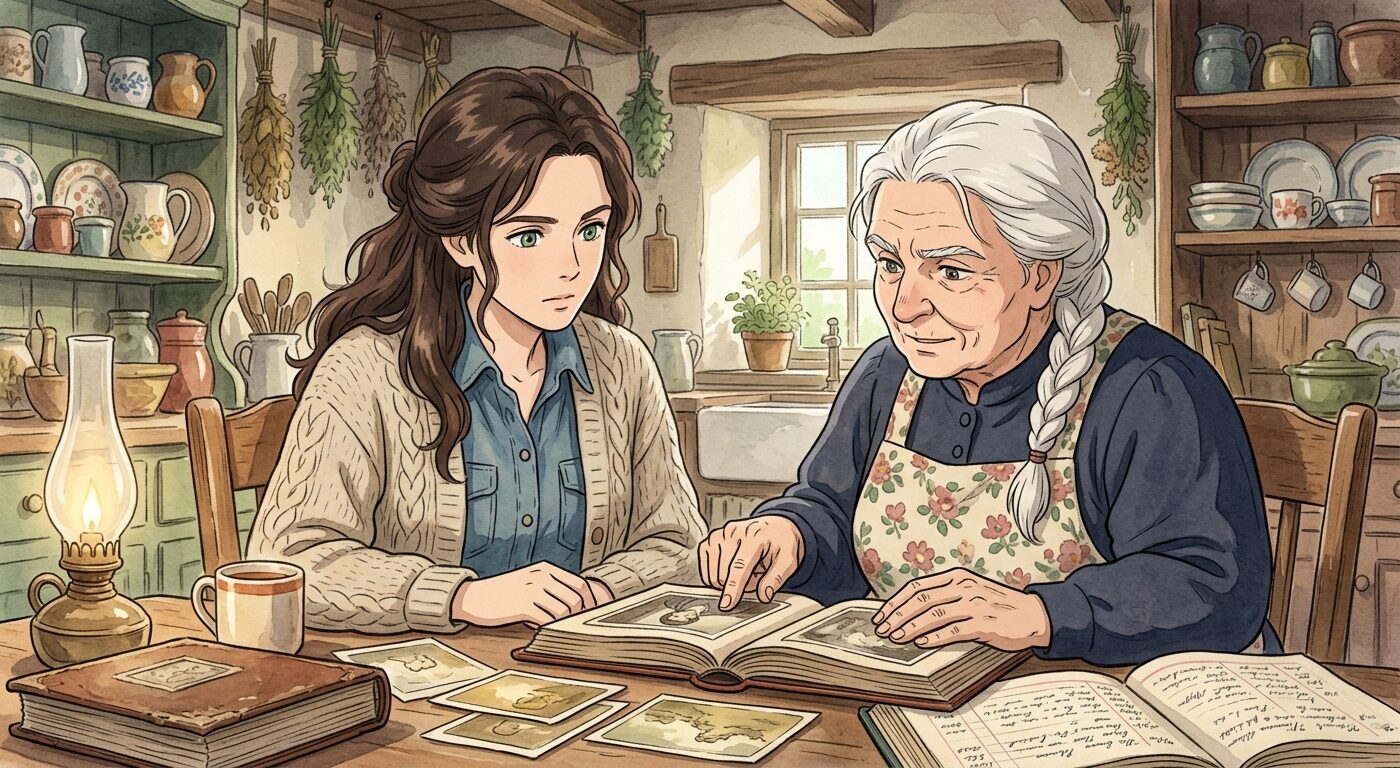
Oakhaven had no formal library, but it had Marta Thorne, and in Marta’s cluttered home, history was meticulously, if selectively, kept. The air in her kitchen, thick with the scent of baking bread and dried herbs, offered a comforting contrast to the bleakness outside. Lara explained her curiosity about Elias’s journals, carefully omitting the more fantastic elements.
“Elias always had a knack for seeing what others didn’t,” Marta mused, pouring Lara a steaming mug of strong, sweet tea. “Or perhaps, for remembering what others preferred to forget.” She pulled out a stack of old photo albums, their covers faded velvet. “My grand-mam kept these. Records of Oakhaven life. The good times… and the quiet times.”
As Lara turned the brittle pages, she noticed a recurring pattern. Photos of bustling town festivals, then pages filled with somber portraits. Group photos of families, then subsequent shots missing certain faces, without explanation. Marta offered vague anecdotes: “Ah, that was old Man Hemlock’s boy. Left for the mainland, never heard from again. And the sisters, the Finches. Such a shame. Their boat just… vanished.” The ‘departures,’ Marta called them, always spoken with a liminal tone, as if they were not absences but merely shifts in location, just beyond the visible.
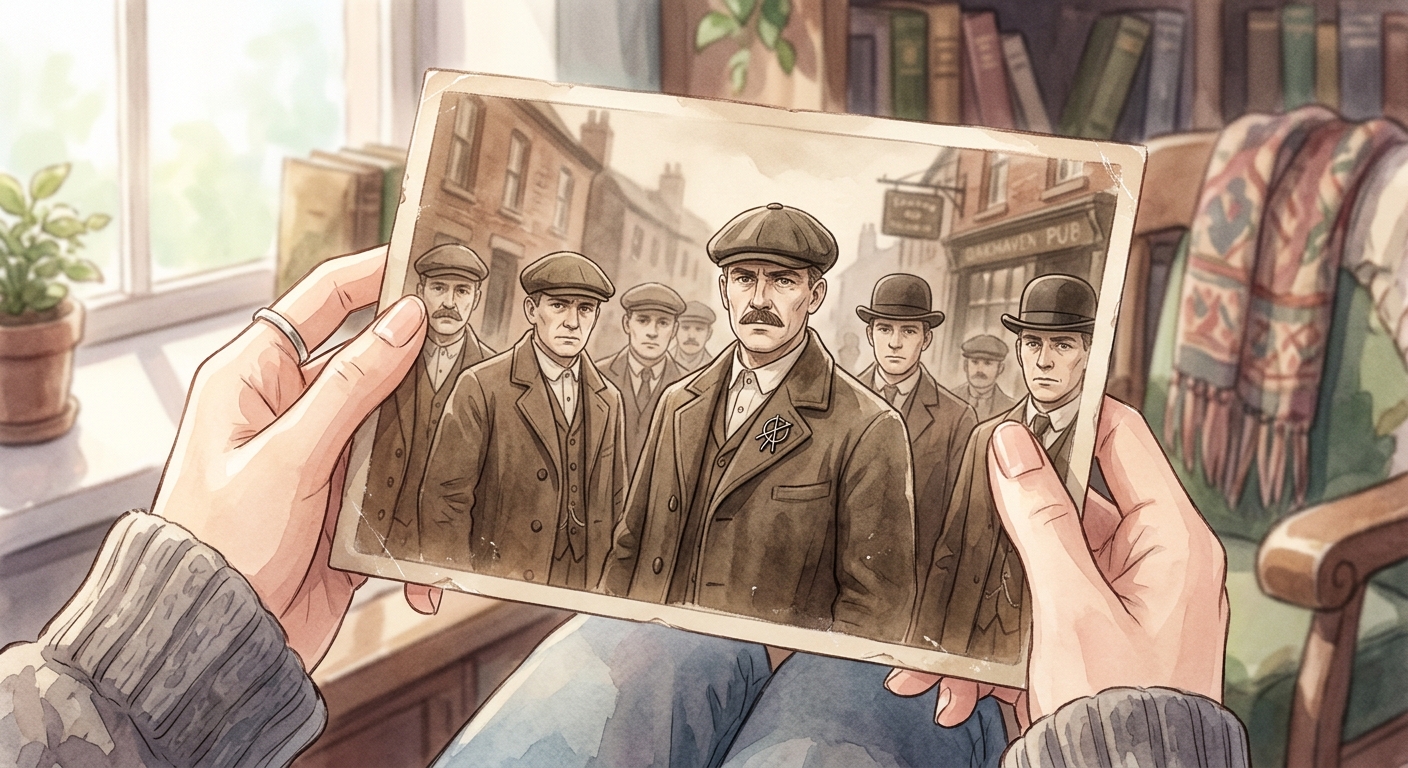
Lara found herself drawn to a faded sepia photograph of a community gathering, perhaps a hundred years old. In the foreground, a group of stoic men stood, and one of them, prominently displayed on his lapel, wore a pin with the identical broken circle and radiating lines from Elias’s locket. “This symbol,” Lara said, pointing. “What does it mean?”
Marta’s smile tightened, losing some of its warmth. “That? Just an old Oakhaven mark. For those who watch. The keepers, they called themselves, in the old days. Before Elias, there were others. Long line of them.” Her eyes flickered away, as if the symbol held too much weight to speak of casually. “Some things are best left undisturbed, child. The sea takes what it’s owed, eventually. Always has.”
Leaving Marta’s, Lara felt the weight of her words. The town itself seemed to shift, subtly. The constant mist no longer felt merely atmospheric; it felt like a deliberate veil. She saw fishermen meticulously polishing their boats, their movements almost ritualistic. She overheard hushed conversations about a “bad season” that sounded less about catches and more about something insidious creeping closer. The quiet acceptance in the townspeople’s eyes, the way they avoided direct gaze when discussing anything beyond the mundane, began to feel less like politeness and more like a collective, silent dread. The blight, Elias’s journals, the symbol, Marta’s veiled warnings—they were all converging, painting a picture that defied rational explanation, yet clung to her with unsettling tenacity.

What did you think?
Reader Thoughts
No thoughts yet. Be the first to share yours.
Join the conversation
Log in or create a free account to share your thoughts on this story.