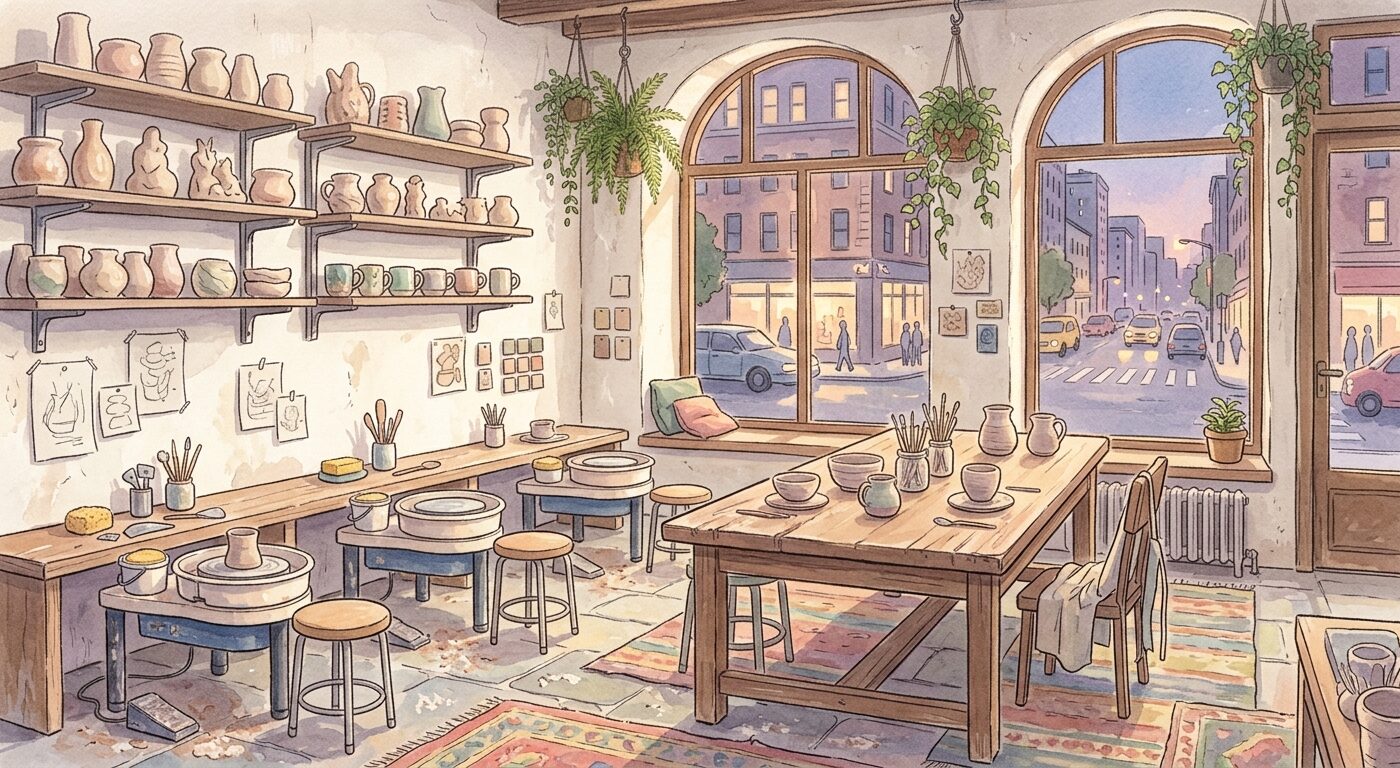
The clay felt like an accusation under Aida Khatun’s trembling fingers, cold and stubborn, utterly unlike the pliable fabrics she had known for seventy years. Her first attempt at a bowl was a lopsided disaster, collapsing inward like a sigh, sending a splatter of grey mud onto her faded floral sari. Around her, the whir of pottery wheels blended with the distant chatter from the community center’s main hall, a symphony of purpose that felt entirely beyond her.
“I think… I am too old for this, Javi,” she murmured, her Bangladeshi accent softening the sharp edge of her self-doubt. She looked at her hands, once so nimble with needle and thread, now clumsy and uncertain.
Javier Rojas, her instructor, appeared beside her, his bright turquoise t-shirt a splash of color against the muted studio. His hands, perpetually dusted with clay, moved with a practiced grace as he nudged her lump of clay back into a semblance of a cone. “Nonsense, Aida-ji! Age is just more experience. The clay, it feels that history.”
“It feels my history of sewing, not shaping,” she replied, a faint smile playing on her lips despite herself. His enthusiasm was infectious, even if she felt immune.
He laughed, a warm, resonant sound. “Perhaps! But isn’t a beautiful sari, at its heart, about shape? About flow, about making something out of nothing?” He paused, his dark eyes sparkling. “Just breathe. Let the wheel be your friend. Feel the cadence.”
Aida tried again. This time, a memory of her mother’s hands, kneading dough for rotis, surfaced. The rhythm was different, but the intent was the same: gentle, firm pressure, an understanding of the material. Slowly, painstakingly, a cylinder began to rise. It wasn’t straight, it certainly wasn’t tall, but it didn’t collapse. She opened it carefully, her fingers forming a wide, shallow bowl, its rim wobbling like a tired smile.
“It is misshapen,” she said, pulling her hands away as if caught doing something wrong. “So ugly.”
“No, Aida-ji,” Javi said, his voice soft, an unexpected tenderness in his usual boisterous tone. He carefully took the bowl from the wheel. “It is… *unfurling*. Like a flower that didn’t quite get enough sun, but bloomed anyway. It has character. It has life.”
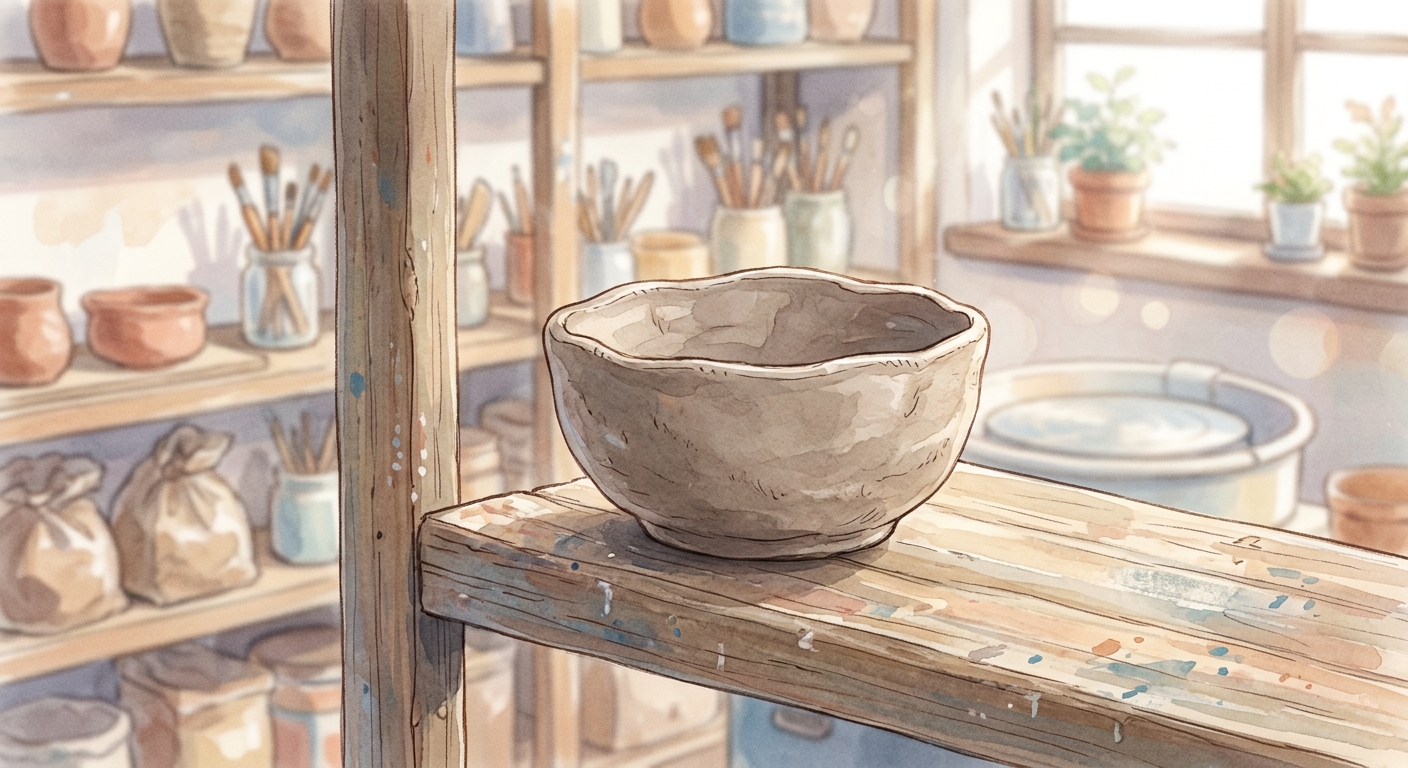
Aida looked at the little bowl in his hands. Its asymmetry was undeniable, the rim thicker on one side, a faint spiral mark from her thumb near the base. Yet, under Javi’s earnest gaze, it wasn’t just a failure. It was *hers*. It held the echo of her hesitation, the story of her awkwardness, and the triumph of simply staying on the wheel. It was a bowl that hadn’t given up, just like her.
She took it from him, feeling its surprising weight. It wasn’t perfect, not by her seamstress standards. But it was real. And in its quiet, persistent defiance of symmetry, she saw something else: a small, sturdy vessel capable of holding whatever new, unexpected joy she might find.
“Perhaps,” Javi chirped, reading the shift in her expression, “it will hold your morning tea?”
Aida Khatun actually smiled, a genuine, unfurling smile. “Perhaps,” she said, holding her imperfect bowl a little tighter. And for the first time in months, the hum in her heart didn’t feel like an empty space, but a quiet, hopeful anticipation.

What did you think?
Reader Thoughts
No thoughts yet. Be the first to share yours.
Join the conversation
Log in or create a free account to share your thoughts on this story.