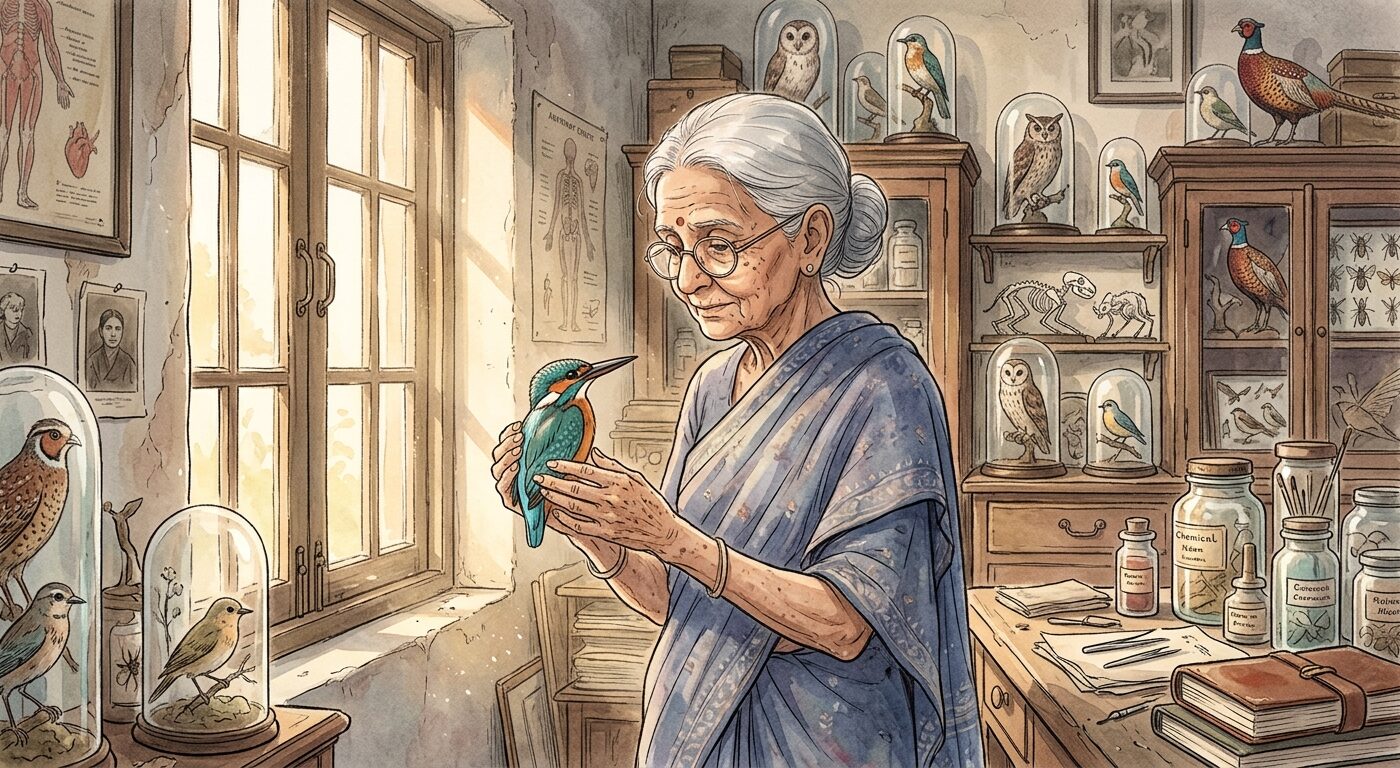
The stillness of the studio was a language Kamala Devi understood better than words, a quiet dialogue between dust motes and the preserved gaze of creatures who had once known flight. For seventy-eight years, she had inhabited this space, a dilapidated relic nestled amongst the clamor of a city that had long forgotten its old ways. The scent of camphor and dried herbs clung to the worn wooden balustrade of the narrow staircase, a fragrant anchor in a world perpetually rushing forward.
My hands, she thought, watching them tremble slightly as she carefully laid out her tools, know this dance. They remember the intricate curves of bone, the fragile membrane of wings, the minute adjustments needed to capture a flicker of life in glass eyes. Each feather placed, each seam stitched, was a prayer, a quiet resistance against the finality of decay. The city outside, a blur of traffic and neon, held no such reverence for permanence. Its beauty was fleeting, loud, and often, cruel.
Today, her canvas was a kingfisher, brought to her by a young man whose grief had been a tangible thing, heavy as the bird itself. Its iridescent blues and greens, once vibrant enough to snatch light from a river, were now dulled, ruffled by an accidental encounter with a windowpane. Kamala traced the delicate curve of its beak. So much beauty, so easily broken.
She remembered a childhood afternoon, her grandfather, a taxidermist before her, patiently teaching her how to clean and prepare a tiny sparrow. The awe, the meticulous care, the sheer wonder of seeing life re-emerge from stillness. That memory, steeped in the sepia tones of the past, was a tapestry woven into the very fabric of her being, a comfort in these quiet, solitary years.
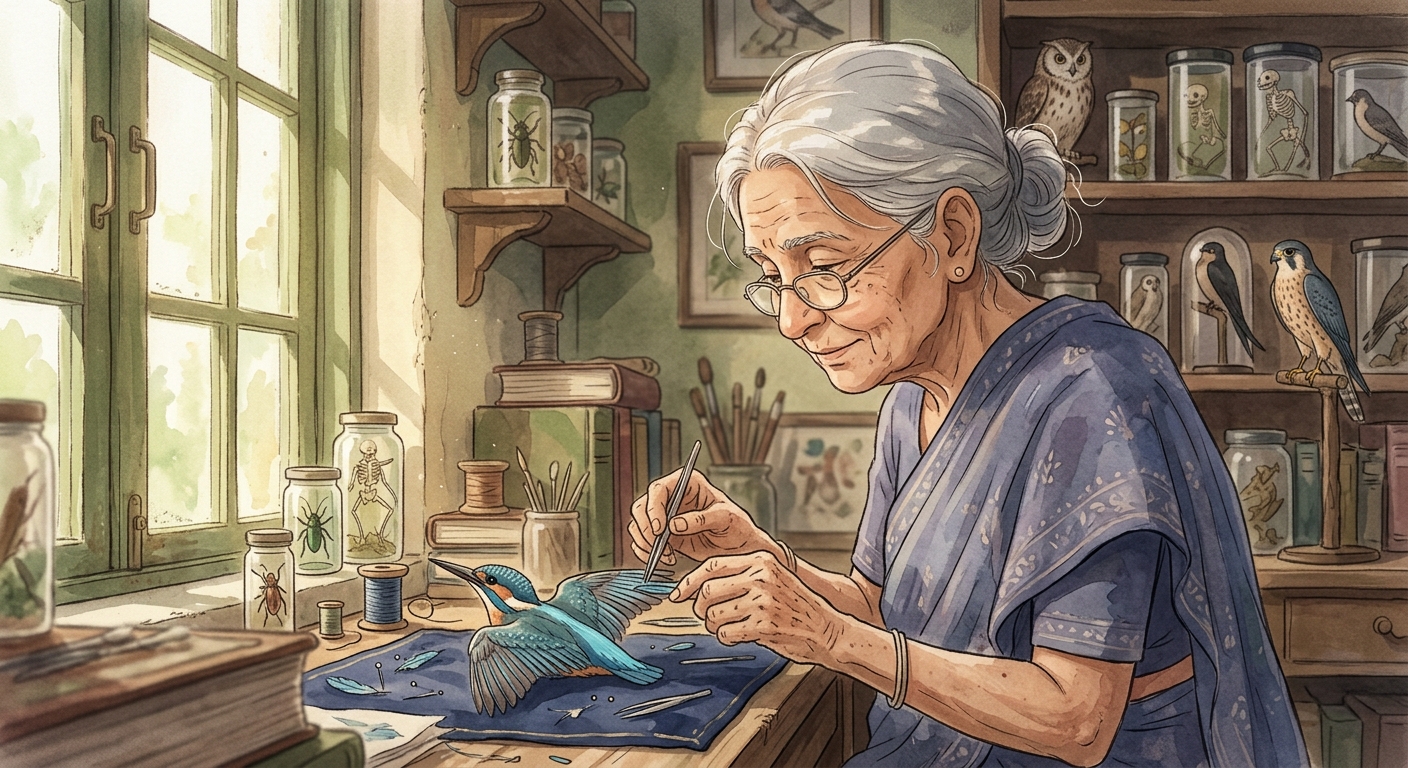
Hours melted into the rhythmic scrape of a scalpel, the careful application of preserving agents, the sculpting of the armature. Her focus narrowed, the world outside receding until only the kingfisher and her hands existed. The broken feathers were painstakingly smoothed, replaced where necessary with those from her carefully curated collection, each chosen for its perfect match in hue and luminescence. It was a slow, deliberate conversation between artist and subject, a whisper of respect across the veil of death.
When she finally placed the glass eyes, tiny spheres of black, into their sockets, a gasp escaped her. The kingfisher, once a lifeless bundle, seemed to awaken. Its head, cocked slightly, held a knowing intelligence, a hint of its former darting energy. The blues and greens, no longer muted, caught the weak afternoon light, mirroring the verdigris on the copper pipes outside her window.
“There you are,” Kamala whispered, her voice a reedy murmur in the quiet. “You found your stillness, didn’t you?”
She placed the finished bird on a high shelf, next to a watchful owl and a leaping squirrel, a new jewel in her collection of resurrected lives. Each one a testament, not to triumph over death, but to a quiet acceptance of it, a gentle refusal to let beauty vanish entirely. The studio felt lighter, infused with the kingfisher’s silent song. Kamala Devi leaned back in her chair, a deep, weary satisfaction settling in her bones. The city would keep rushing, oblivious to the delicate dance performed within these four walls, but here, in the stillness, beauty endured. Not as it once was, perhaps, but as a tender, bittersweet echo.
What did you think?
Reader Thoughts
No thoughts yet. Be the first to share yours.
Join the conversation
Log in or create a free account to share your thoughts on this story.