The Fabric of Time
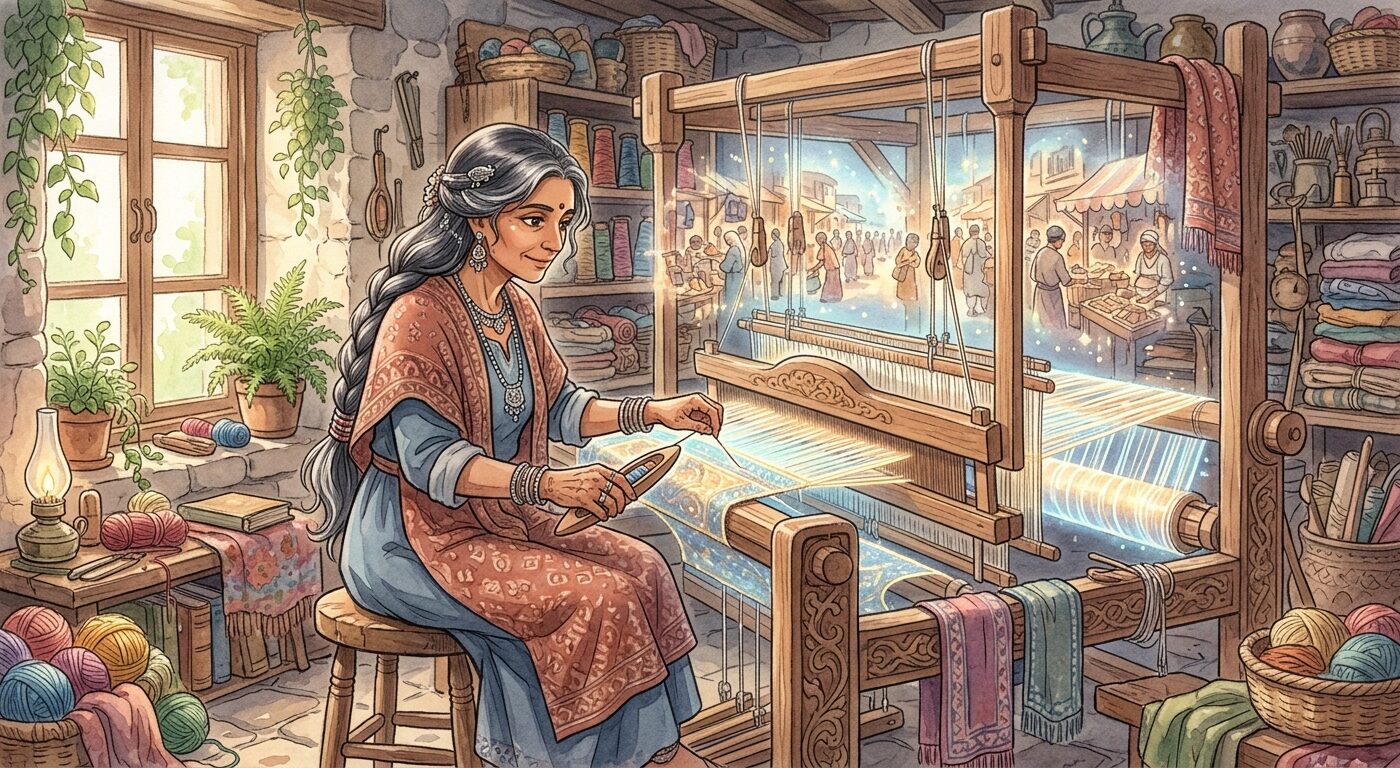
Jaya Devi, a slender South Asian woman in her mid-40s with long, dark, braided hair streaked with silver, kind, observant eyes, and calloused hands. She prefers comfortable, layered tunic dresses and intricate silver jewelry. She ran her fingers over a length of iridescent silk, salvaged from a forgotten theatre’s curtain. Her workshop, a sprawling, repurposed space near the Old Quarter’s languid canal, was a sanctuary of texture and memory. Every bolt of fabric, every piece of salvaged metal, every shard of forgotten glass hummed with a unique resonance, a faint echo of its former life. Jaya didn’t just see materials; she felt their history, their stories whispering against her skin. It was why she chose the Old Quarter, a place thick with these resonant whispers, for her art.
Her current project, a sprawling tapestry commissioned by a new gallery downtown, was proving particularly volatile. She’d incorporated fragments of ancient market stalls, a discarded tram conductor’s uniform, and even scraps of a child’s worn blanket, all found near the old waterways. As she wove, the threads seemed to pull at her, not just physically, but psychically. Images flashed behind her eyes: the scent of spices, the cries of vendors, the rush of cold water, the faint echo of a lullaby. These weren’t mere imaginings; they were vivid, tactile sensations, more real than the hum of her loom.
“You carry so many stories,” she murmured to the tapestry, her voice soft but certain.
Visions and Threads
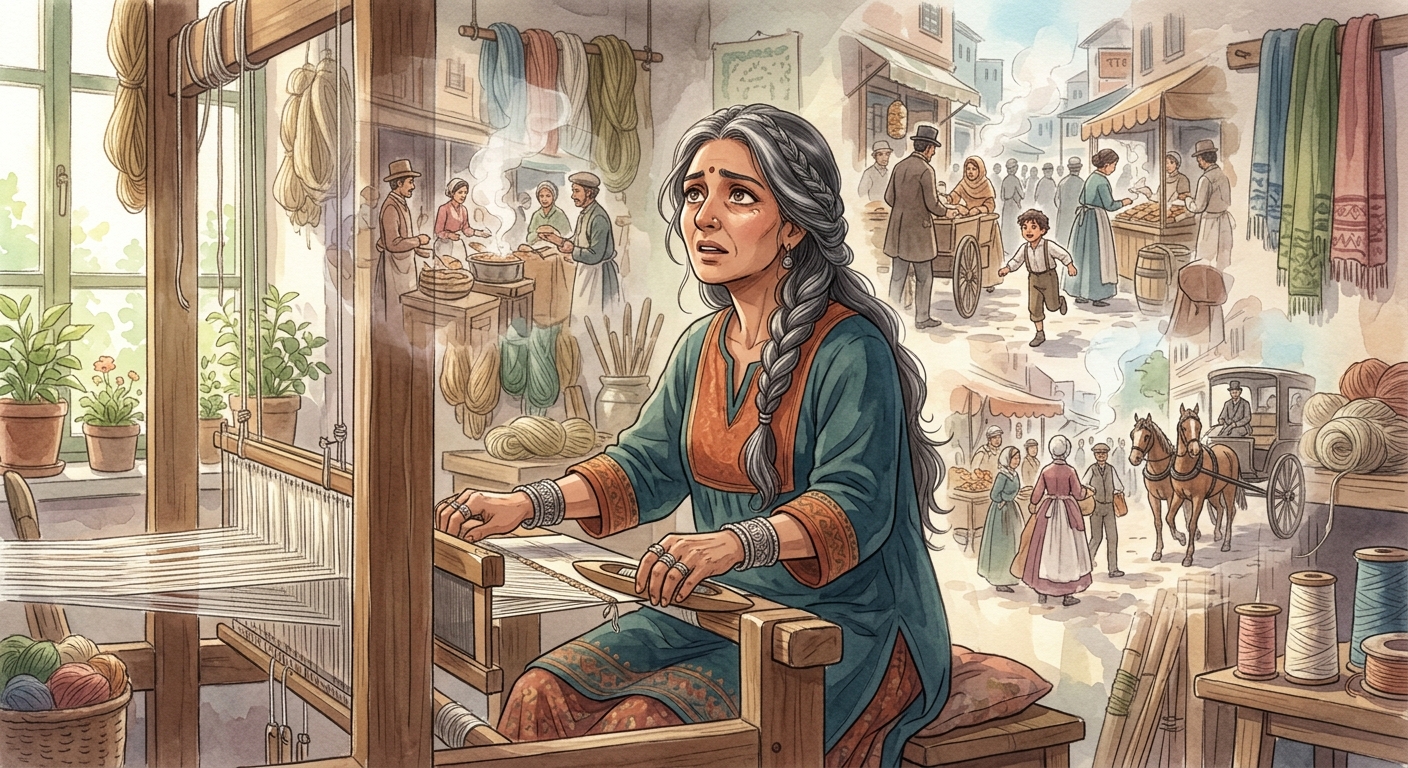
One evening, while working on a particularly intricate section, the visions became overwhelming. The workshop walls seemed to ripple, transparent images overlaying her familiar space: a woman with a defiant chin, haggling over silks; a boy chasing a stray dog down a bustling alley; the hurried exchange of hushed words near a narrow bridge. Jaya gasped, dropping her shuttle. She gripped the edge of her loom, her knuckles white. It felt as though she was not just observing these lives, but briefly *living* them, experiencing their emotions, their anxieties, their fleeting joys. The Old Quarter wasn’t just old; it was *alive*, and she was a conduit for its collective memory.
A knock on her workshop door, loud and unexpected, startled her out of the reverie. Jaya rarely had visitors. She cautiously opened it to find an elderly South Asian man in his late 70s with wispy white hair combed back, a neatly trimmed beard, and gentle, deep-set brown eyes. He wears a faded, patched tweed jacket and spectacles perched on his nose, standing on her doorstep. Ishmael ‘Ish’ Akhtar. His presence, even before he spoke, felt like a familiar note in the cacophony of echoes. He held a small, antique brass key, which pulsed with a faint, steady glow—a mirror to the vibrant energy radiating from her loom.
“I sensed a strong resonance,” Ishmael said, his eyes scanning her workshop, taking in the shimmering air. “A weaving of histories. My name is Ishmael. I believe we have much to discuss about the city’s memory.”
A Shared Perception
Jaya, still a little shaken by the intensity of her visions, felt an immediate, inexplicable trust for Ishmael. He didn’t question her reality; he simply *understood*. She invited him in, offering him a steaming cup of herbal tea. As they spoke, sharing their experiences, a profound sense of recognition settled between them. Ishmael described his ‘echoes,’ and Jaya detailed her ‘woven histories.’ They were two sides of the same coin, perceiving the spectral imprint of the past in their own unique ways.
Ishmael explained the ‘Veridia Renewal’ project, how it threatened to silence the very echoes Jaya was so attuned to. He spoke of a growing disharmony, a creeping emptiness that he had first felt in the archive. Jaya nodded, remembering the chilling silence that had permeated her visions, the feeling of something precious being lost. Her resolve hardened. Her art wasn’t just about beauty; it was about remembrance, about giving voice to the voiceless. If the city’s memories were threatened, then her loom would become a shield, her threads a net to catch the fading narratives.
As Ishmael prepared to leave, he placed the brass key on her workbench. “This key,” he said, “it holds an old, deep memory. Perhaps you can weave its story into your tapestry, for the Old Quarter’s heart needs all its fragments to be whole again.” Jaya picked up the key, its warmth spreading through her palm, a new chapter in the city’s story beginning to unfurl on her loom. The whispers of the past, though threatened, would not be silenced easily, not while she had thread and needle, and a quiet, determined heart.



What did you think?
Reader Thoughts
No thoughts yet. Be the first to share yours.
Join the conversation
Log in or create a free account to share your thoughts on this story.