The Archive’s Slow Sigh
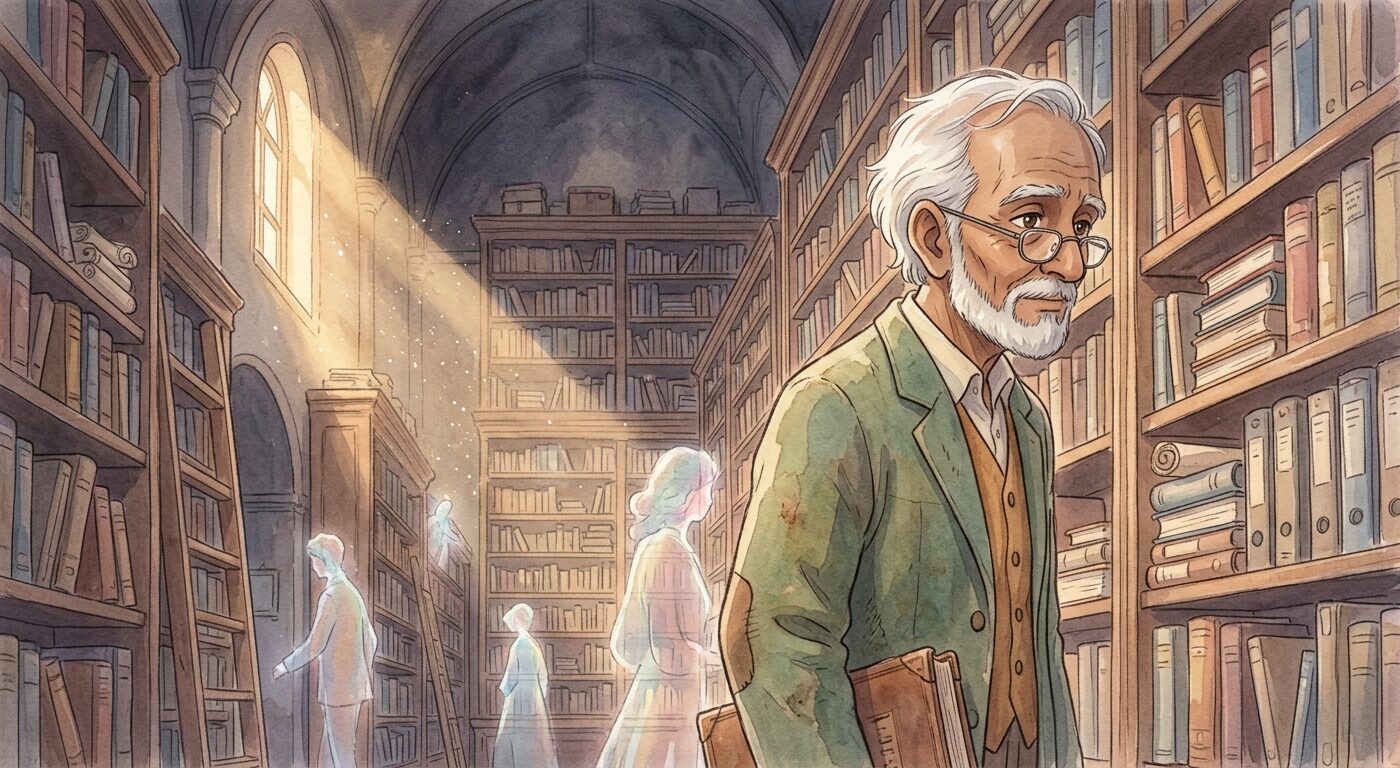
Ishmael ‘Ish’ Akhtar traced the spine of a leather-bound ledger, its pages brittle with the breath of a century. The Veridia Municipal Archives, housed in a repurposed 19th-century post office, hummed with a different kind of electricity than the sleek towers outside. Here, the air was thick with paper dust and the silent rustle of forgotten lives, a symphony only he seemed to hear. Ishmael, an elderly South Asian man in his late 70s with wispy white hair combed back, a neatly trimmed beard, and gentle, deep-set brown eyes. He wears a faded, patched tweed jacket and spectacles perched on his nose. For decades, he had been the archive’s sole guardian, not just of documents, but of the faint, shimmering presences he called ‘echoes’—residual memories of the city’s inhabitants, clinging to objects and structures within the Old Quarter.
Today, the hum felt discordant. A chill, unlike any draft, snaked through the stacks. The echoes, usually a gentle, background murmur of lives, seemed to recede, their faint forms wavering like smoke. He touched a cold marble pillar, a relic from the Old Quarter’s original city hall, and felt not the usual comforting warmth of lingering pride or civic duty, but a hollow ache. The ‘Veridia Renewal’ project, whispered about for months, had been officially announced that morning. A tremor of panic, sharp and cold, shot through him. They weren’t just razing buildings; they were erasing souls.
“They are silencing the city,” Ishmael murmured, the words catching in his throat.
A Disturbing Premonition
He moved through the archive’s vast halls, his steps cushioned by years of familiarity. Each row of files, each map cabinet, held fragments of the Old Quarter’s story. Here, the marriage certificate of a spice merchant and a textile weaver from 1887. There, the blueprints for a grand canal that was never fully built, only partially glimpsed in the forgotten waterways beneath the district. The echoes here were particularly vibrant, a tapestry of joy, sorrow, ambition, and quiet resilience. But now, patches of the tapestry felt thin, fraying, as if a great wind was sweeping through, threatening to unravel it all.
Ishmael pulled an antique brass key from his pocket, its surface worn smooth by countless hands. It wasn’t an archive key, but one he’d found decades ago in a demolished tenement, a key to nothing obvious, yet it hummed with a distinct, insistent resonance. He’d always felt it belonged to something vital, something deep within the Old Quarter’s heart. He held it now, closing his eyes, focusing past the archival dust and the scent of old paper. He sought the key’s echo, a desperate plea for guidance. He saw flashes: a busy marketplace, the laughter of children, the clang of a blacksmith’s hammer, all fading into an encroaching grey silence.
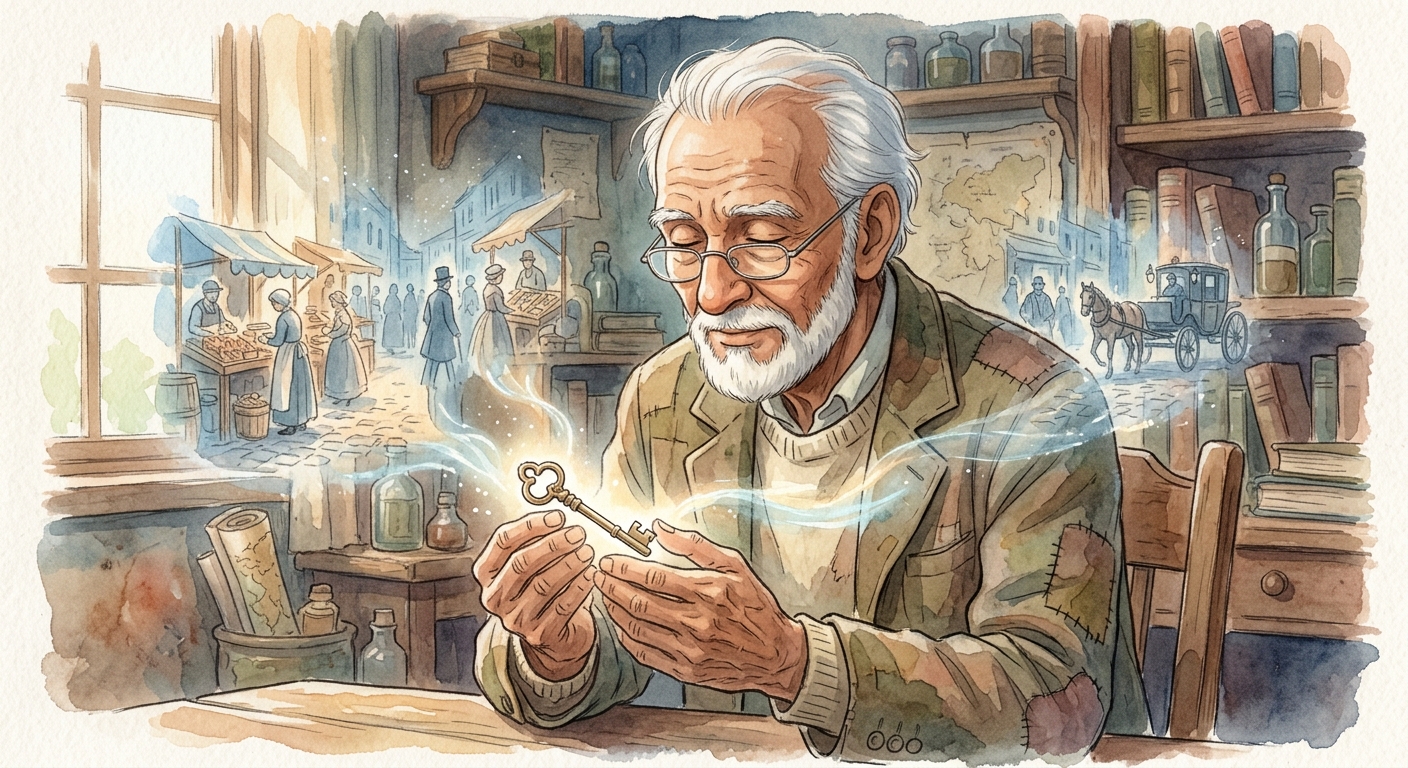
“They build on absence,” he whispered, opening his eyes, a new resolve hardening his gentle gaze. “But absence is a kind of memory, too. And some memories refuse to lie still.”
The Unseen Network
He knew he couldn’t fight the Renewal project with dusty ledgers alone. The city had changed, demanding progress over sentiment. But the echoes themselves, they were a force. They were the very *soul* of the Old Quarter, and if they were truly fading, then the city risked losing more than just buildings; it risked losing its identity, its rootedness. Ishmael imagined the Old Quarter as a complex circuit board, and the echoes as currents of energy flowing through it. If too many connections were severed, the entire system would fail.
He remembered old stories from his grandmother, tales of ‘memory-weavers’ and ‘earth-listeners,’ individuals who could perceive the deep pulse of a place. He wasn’t alone, he realized. There must be others, perhaps unknowingly, who felt the city’s whispers. The brass key grew warm in his hand, a tiny beacon of hope. His task wasn’t just to archive, but to activate. He needed to find the other sensitive souls, the ones unknowingly connected to the Old Quarter’s struggling heart, before the silence became absolute.
Ishmael carefully placed the key back into his pocket, its warmth a tangible reminder of his new, urgent mission. He closed the ledger, a chronicle of a life long past, but in his mind, he was already drawing a new map – a map of unseen connections, of fragile echoes, and of the people who might yet save them. The Old Quarter wasn’t just a place of history; it was a living entity, now threatened, and he, its most devoted archivist, would ensure its story continued to be told.


What did you think?
Reader Thoughts
No thoughts yet. Be the first to share yours.
Join the conversation
Log in or create a free account to share your thoughts on this story.