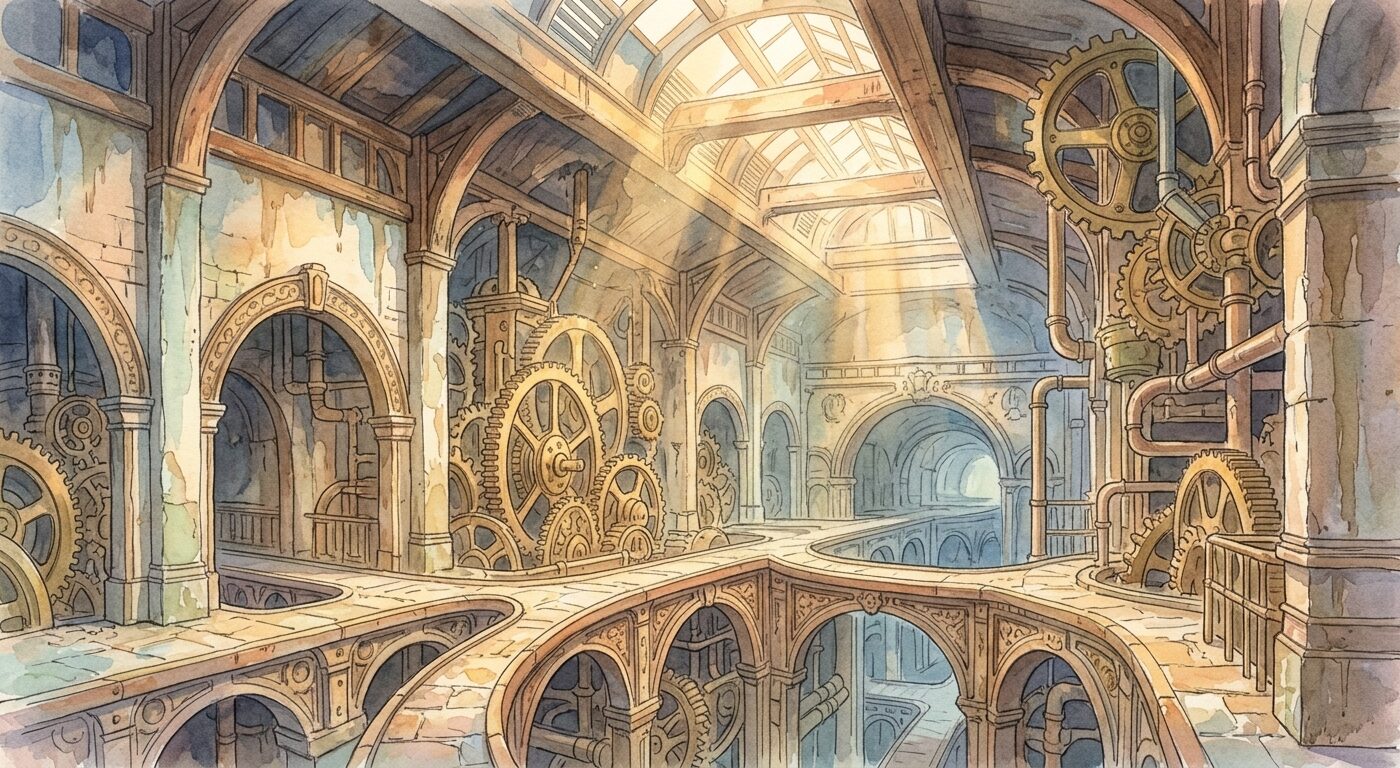
The underground tunnels beneath Union Station smelled of ozone, old oil, and the quiet, persistent tick-thrum of a thousand hidden gears. I knew that symphony, every click and whir of it, like the beat of my own heart. But lately, there was a new note: a low, resonant hum, too rhythmic to be a fault, too melodic to be a drone. It was barely audible, a vibration against the soles of my boots, but once I heard it, I couldn’t unhear it.
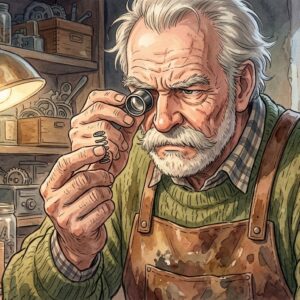
Old Man Renzo, my master, just scoffed. “It’s the city, Kiko. Always a new hum. Leave it be, there’s a capstan in Sector Gamma that needs re-tensioning.” He waved a greasy hand, dismissing my discovery with a puff of pipe smoke. Renzo had been the station’s clockmaster since before my grandmother was born, and what he didn’t know about gears, he usually considered irrelevant.
“But this is different,” I insisted, wiping oil from my spectacles. “It’s…intentional.”
“Everything’s intentional if you look hard enough,” he grumbled, not looking up from his workbench, where he was coaxing a tiny escapement into submission. “Now, fetch the Number Seven wrench.”
I fetched the wrench, my mind still tracing the phantom hum. It wasn’t coming from the main clockwork, I’d already checked. It felt deeper, older, beneath layers of steam pipes and electrical conduits that even Renzo rarely ventured into. It pulled at me, a whispered secret in the station’s vast, mechanical memory.
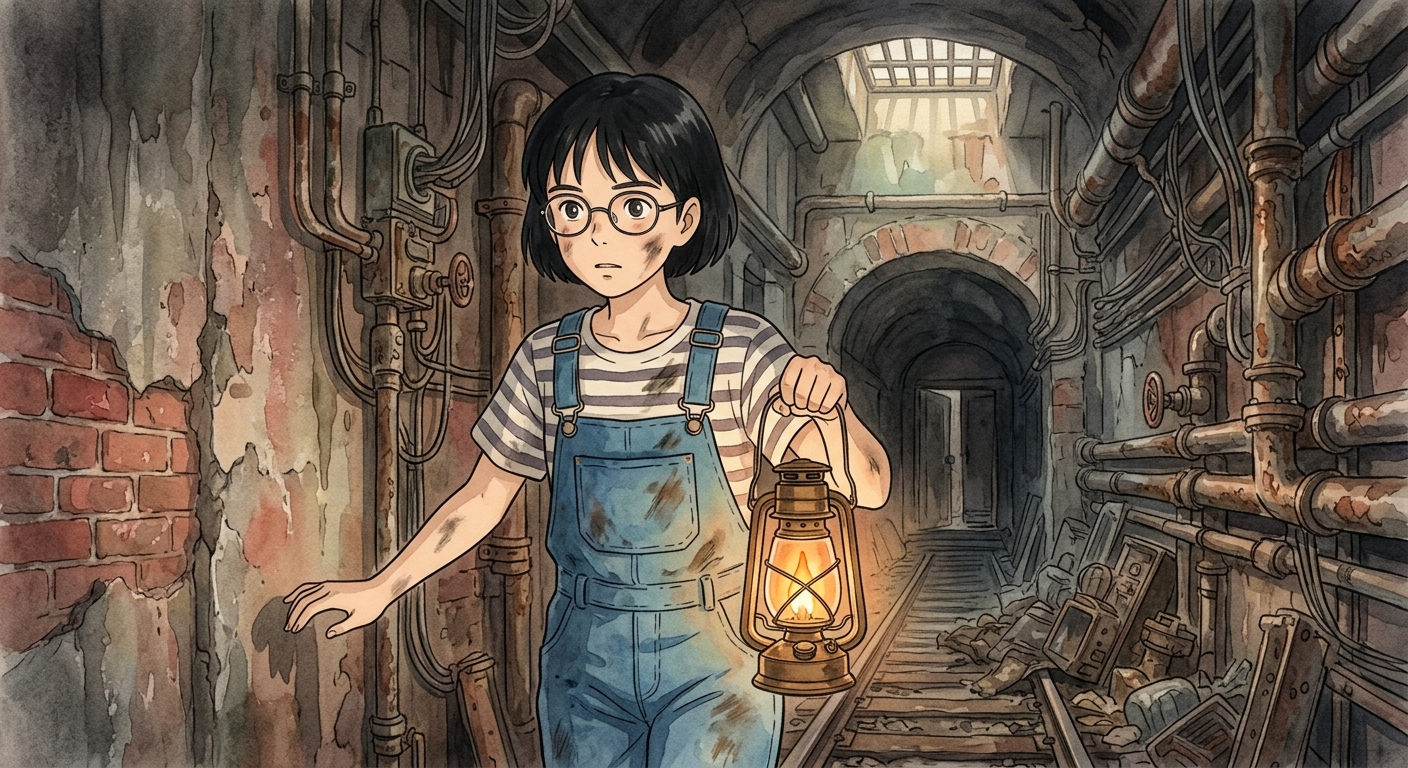
That night, after Renzo had locked up and the last late-night express had rattled past, I slipped back in. My lantern cut a weak circle through the labyrinthine passages. The hum grew stronger as I descended, a low, vibrant chord. It vibrated through the iron gratings, through the very stone, guiding me like a mechanical siren song.
I followed it past forgotten steam engines, their brass hulls green with verdigris, past pressure gauges frozen solid decades ago. The passages narrowed, dust thicker, the air heavy and still. Finally, I reached a dead end: a solid wall of ancient brick, crisscrossed with pipes. The hum pulsed here, directly ahead, a heartbeat behind the masonry. There had to be an access panel, a hidden door, something the original builders left behind.
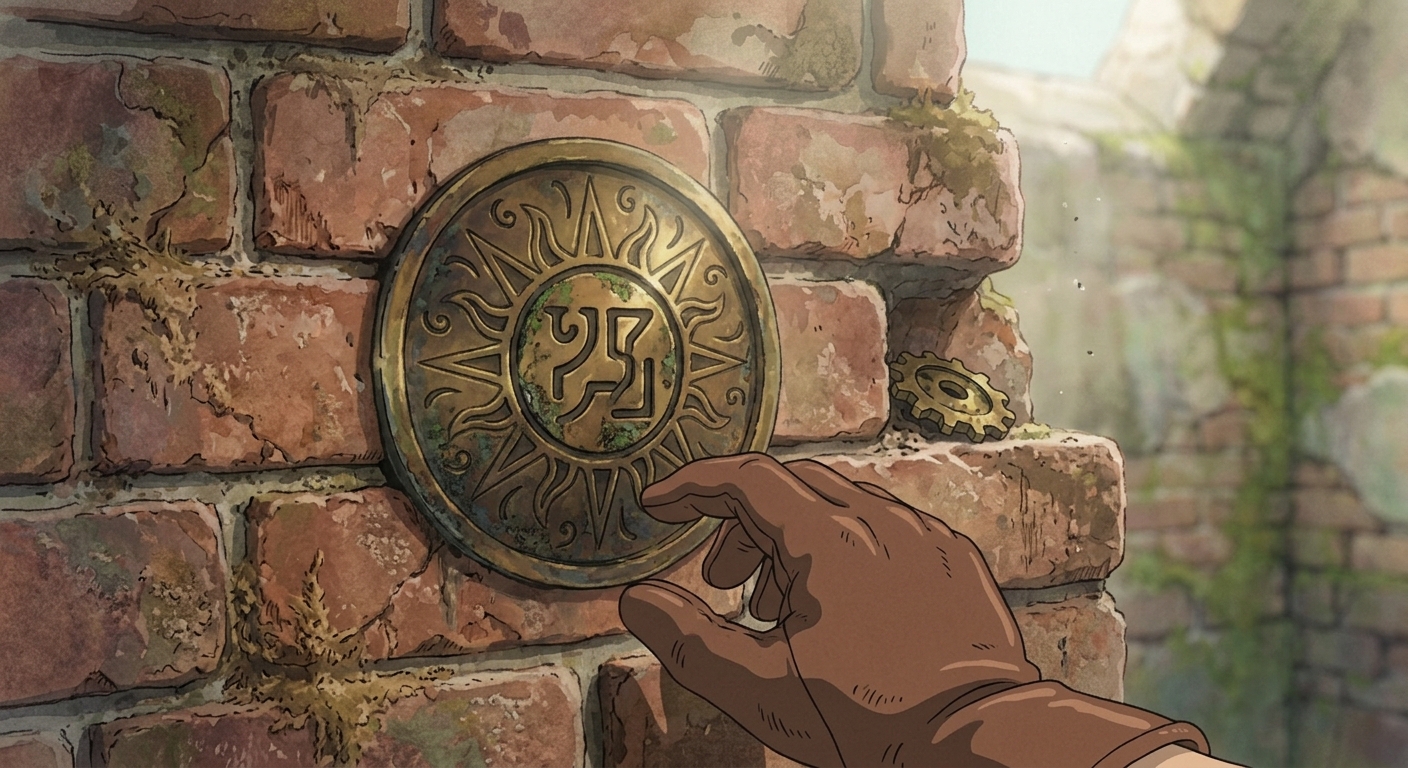
I ran my gloved hands over the cold, rough surface, tapping and listening. Nothing. Then, my fingers brushed against a faint indentation, covered by years of grime. I scraped it clean with a loose cog from my pocket. An intricate brass escutcheon, almost flush with the brick, depicting a sunburst surrounding an ancient, half-forgotten glyph. There was no keyhole, no latch, just the silent promise of a secret.
I remembered Renzo once saying, “The oldest mechanisms aren’t unlocked by force, Kiko. They’re answered.” Answered. But how?
I looked around the small space. Above me, a single, defunct steam pipe ran through the wall. A thought sparked. I pulled a small, multi-tool from my belt, found the right setting, and gently tapped the pipe, replicating the rhythm of the hum I’d been feeling. One tap. Two. Three. A pause. Four taps. The exact, inchoate pattern. The hum intensified, a low groan rising from the wall.
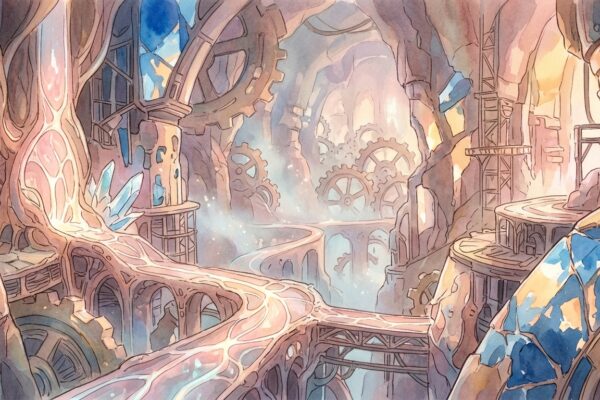
A click echoed, startlingly loud in the silence. The brick wall shuddered, then slowly, majestically, began to retract inwards, revealing a hidden chamber. It was vast, circular, and filled not with decay, but with a colossal, gleaming automaton. It stood perhaps twenty feet tall, forged from polished brass and tempered steel, its myriad gears, springs, and levers all moving in perfect, synchronized harmony. This was the source of the hum, its very being a symphony. In its chest, a large, crystalline lens glowed with an internal light.
As I stepped closer, the light from the lens pulsed, then projected a shimmering, ethereal message onto the far wall. The words, written in a fluid, elegant script, hung in the dusty air: “We are the keepers of time, the whisperers of paths. Seek the next chime.”
The hum resonated deep within me now, a connection forged between the ancient machine and my curious heart. It wasn’t just a mechanism; it was an oracle, a guardian, speaking not of the past, but of a journey yet to begin. I didn’t fully understand it, but I knew one thing: I wouldn’t be fetching wrenches for Old Man Renzo for much longer. The station, it seemed, had many more secrets to share, and I was finally listening.
What did you think?
Reader Thoughts
No thoughts yet. Be the first to share yours.
Join the conversation
Log in or create a free account to share your thoughts on this story.