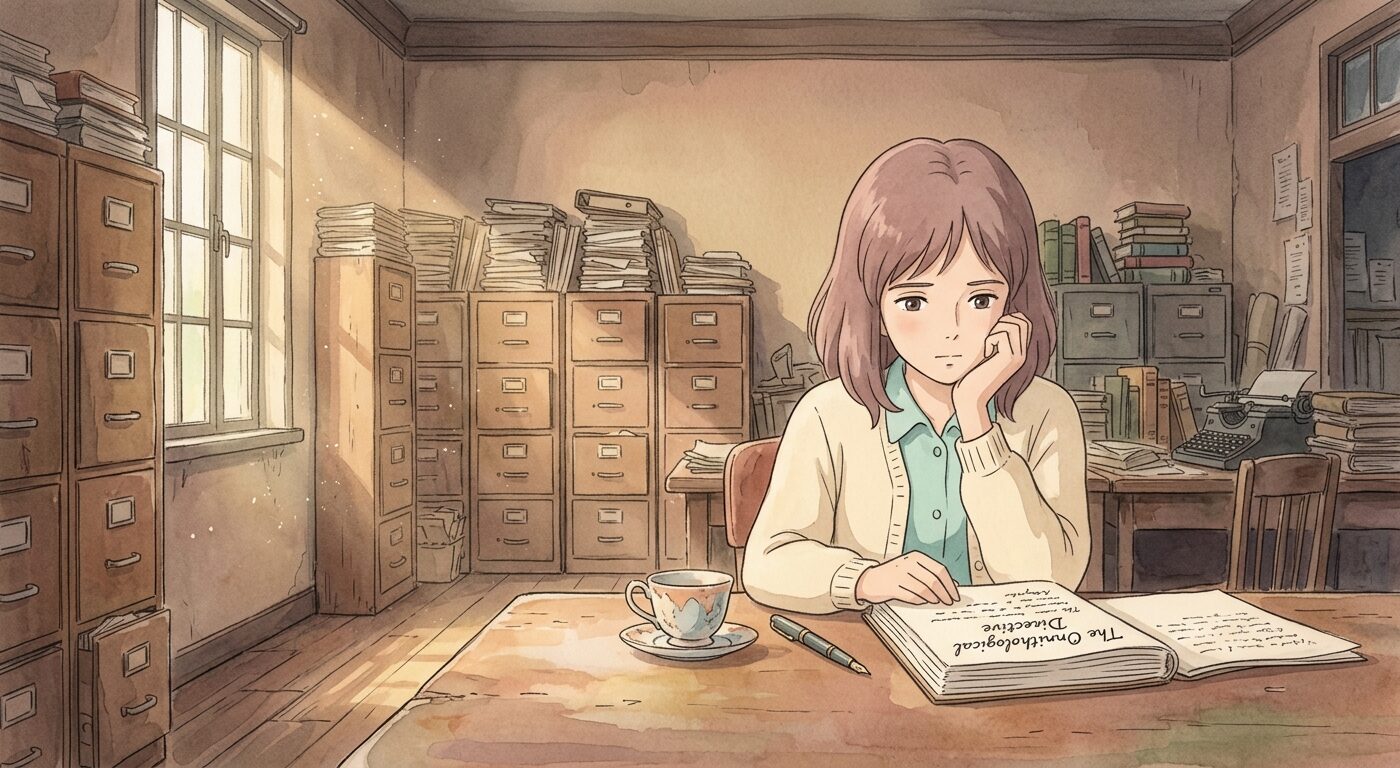
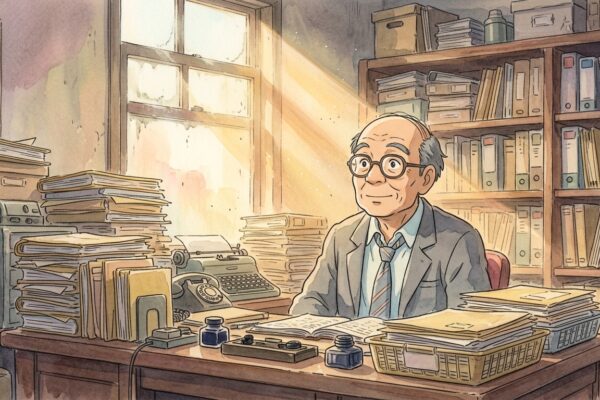
Kaelen, a fixture of Department 7G for longer than anyone could verify, preferred the quiet hum of fluorescent lights to the cacophony of human endeavor, particularly when that endeavor involved ‘unsolicited opinions’. His office, nestled in a forgotten wing of the Municipal Records Building, was a mausoleum of misplaced enthusiasms: pamphlets on artisanal cheese cooperatives, handwritten manifestos on the optimal placement of public benches, a truly harrowing twenty-page treatise arguing for the official recognition of squirrel language. All filed, cataloged, and dispatched to the vast, unseen archives, never to trouble human consciousness again. A perfunctory process, utterly devoid of actual meaning, which suited Kaelen just fine.
His world was order: the precise alignment of pending forms, the rhythmic click of his stamp, the predictable appearance of his lunch — a bland cheese sandwich, every single Tuesday. Deviations were anathema. Which was why the arrival of ‘The Ornithological Directive’ caused a subtle tremor in the force of his routine.
It arrived in a plain brown envelope, thick and surprisingly weighty, smelling faintly of lavender and damp paper. Twenty-three pages, single-spaced, typed on an old manual typewriter, signed simply ‘Elara.’ Kaelen’s initial scan registered keywords like ‘avian communication,’ ‘symbiotic urban integration,’ and ‘the mendicants of the airwaves.’ He considered filing it directly under ‘Miscellaneous Discards,’ but something in the sheer *gravitas* of the absurdity caught his eye. The meticulousness. The footnotes. The appendices.

He set it aside, ostensibly for the ‘urgent’ pile, knowing full well it would never be urgent to anyone but Elara. And perhaps, now, him.
“Mr. Kaelen? What exactly *is* Department 7G supposed to accomplish?”
Nadiya, his current intern, stood in the doorway, her enthusiasm a jarringly bright colour in his muted world. She was young, earnest, and afflicted with the terminal curiosity of youth.
“We ensure the city’s eccentricities are duly noted, Nadiya. So they may be efficiently ignored.”
“But… for what purpose?”
“The purpose, Nadiya,” Kaelen said, carefully straightening a pile of forms, “is the act of noting itself. The city demands it. We merely facilitate.” His gaze drifted to Elara’s directive.
Later, as the low afternoon light filtered through the grimy window, Kaelen found himself reading. Not the usual snippets of grand folly, but sections. He learned of the specific vocalizations of the common city pigeon, the subtle shifts in their feather colours indicating emotional states, the intricate pecking order in a crowded square. Elara had even included diagrams of various bread crumb distribution patterns for optimal flock harmony. It was utterly mad. And utterly compelling.
Her prose, though dense with arcane pigeon-lore, held a quiet conviction. She spoke of the city’s pigeons not as vermin, but as ‘unacknowledged co-inhabitants,’ ‘sentinels of forgotten corners,’ even ‘transient oracles.’ There was a short anecdote about an unnamed woman who, for decades, had left sunflower seeds on her windowsill, and how the pigeons had responded with a chorus of ‘gratitude coos,’ a language Elara claimed to have transcribed into a system of ‘avian vignettes.’
Kaelen pushed his spectacles up his nose, a rare, unbidden smile tugging at the corner of his lips. He walked to the window, pushed aside the venetian blinds, and gazed down at the bustling street below. A flock of pigeons, indistinguishable from one another moments before, now seemed to shimmer with individuality. One strutted with a particular bravado. Another, smaller, seemed to observe its surroundings with a cautious, intelligent gaze. He found himself searching for the ‘gratitude coos,’ for the ‘avian vignettes,’ for the unacknowledged co-inhabitants.
He didn’t find them, of course. Not yet. But for the first time in perhaps thirty years, Kaelen didn’t just see pigeons. He saw the potential for a protocol. He saw the intricate, absurd beauty of Elara’s world, briefly superimposed upon his own. He returned to his desk, picked up a pen, and forgoing the stamp, he meticulously noted, in his neat, copperplate hand, a single, unexpected word on Elara’s cover page: “Considered.”

What did you think?
Reader Thoughts
No thoughts yet. Be the first to share yours.
Join the conversation
Log in or create a free account to share your thoughts on this story.