The Order of Dust and Time
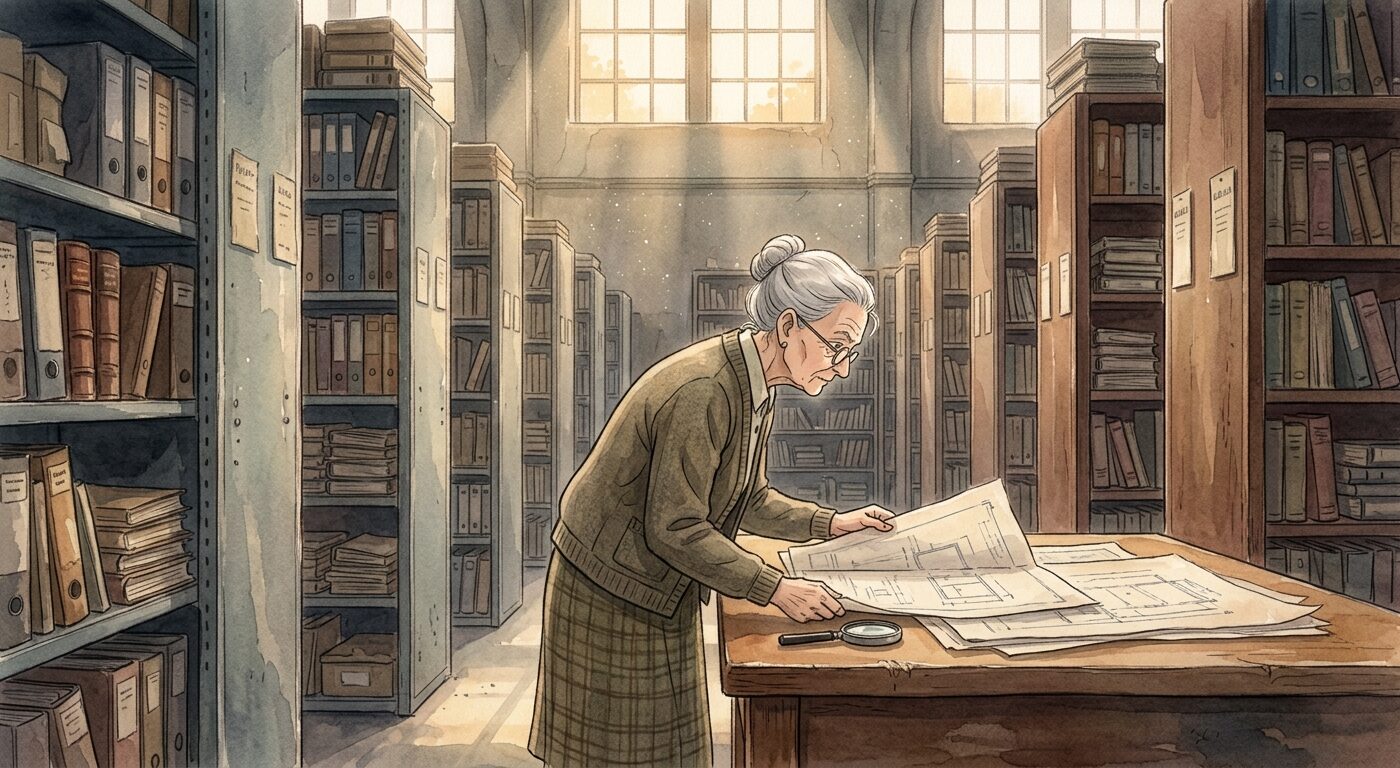
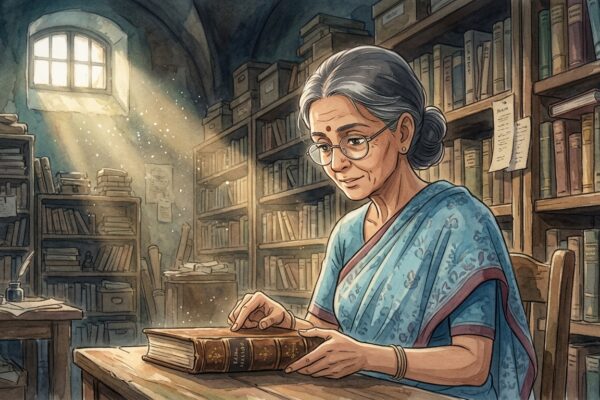
The Department of Obsolete Records was Irmina Ziemba’s sanctuary, a vast mausoleum of forgotten municipal truths. Steel shelves, taller than ancient oaks, groaned under the weight of ledgers, maps, and reports, all smelling faintly of lignin and the slow decay of time. Here, amidst the methodical hum of the climate control system and the occasional flutter of a dust-moth, Irmina found solace in the immutable order of things. For forty-seven years, she had been a custodian of facts, a keeper of the city’s documented past. Nothing, she believed, was beyond the reach of a diligent cross-reference or a careful index card. That belief, however, had recently begun to fray.
It began with a request for the complete architectural history of the Central Library, a stately Art Deco edifice that dominated the city square. A routine task, one she’d performed countless times. She retrieved the original 1928 blueprints, unfurling the brittle linen sheets onto her large, felt-covered table. The ink was faded but precise: the grand hall, the reading rooms, the archives, a modest administrative wing. All perfectly familiar. Then, her fingers brushed against a rolled parchment tucked deeper into the archival tube. It was dated 1934, marked “Proposed Expansion, Central Library – West Wing.”
An Impossible Addition
Irmina’s brow furrowed. The Central Library had no west wing. It had never had one. She knew its every brick, its every gargoyle. Yet, here was a detailed schematic: a new public gallery, an additional children’s section, even a dedicated periodicals room. Her first thought was error, a misfiled document, perhaps for another city’s library. But the annotations, the municipal seals, the surveyor’s signature – all were undeniably local, undeniably authentic. She reached for the 1938 city planning documents, then the 1945 building permits. Nothing. No record of the west wing’s construction, no budget allocations, no historical footnotes. It was as if the concept itself had simply vanished from the physical world, leaving only this blueprint as a ghostly echo.
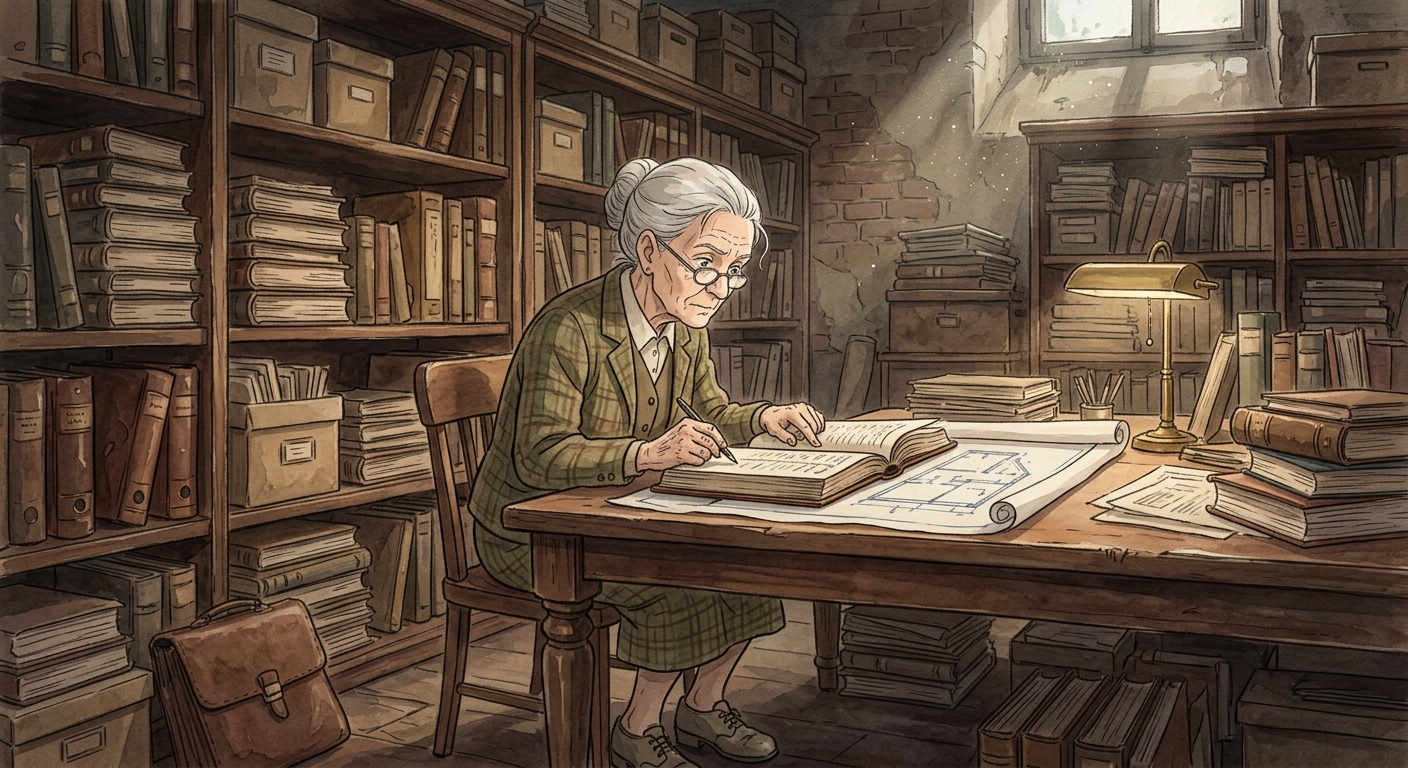
The following weeks saw Irmina consumed. Her precise routine, once a comforting rhythm, became a frantic search. She consulted council meeting minutes from the 1930s, old newspaper archives, even personal correspondence from city architects. Still, silence. Then, a peculiar detail emerged. A 1957 inventory of public assets casually mentioned “the Central Library, including its west gallery,” while a 1962 budget report allocated funds for “maintenance of the west wing’s plumbing.” These were not proposals; they were statements of fact, embedded within records that made no other mention of the wing’s existence. It was as if, at some point, the west wing had been briefly, yet concretely, real to the city’s bureaucracy, only to be erased from physical space and general memory alike.
The Fraying Edge of Reality
“One cannot build what does not exist,” Irmina muttered to herself one afternoon, the dust motes dancing like tiny bewildered spirits around her head. “And yet, one cannot maintain what was never built.”
The paradox gnawed at her. Her hands, calloused from decades of handling brittle paper, trembled slightly as she examined a faded photograph of the library from 1960. It showed the familiar east facade, the north entrance, but where the west wing should have been, there was only the established brick wall, framed by mature elm trees. No sign of the additional structure, no scar of a demolition. It was utterly absent. Yet, the inventory, the budget report… they insisted. Had the city dreamt a building into being, only for the dream to evaporate, leaving behind a few phantom references in paper?
A New Kind of Truth
Irmina found no answers, no grand conspiracy, no forgotten historical event to explain the phantom wing. Instead, she found a different kind of truth. The world, or at least the city’s documented past, was not as solid, as immutable, as she had always believed. Some histories were written in blueprints and budgets, only to be unwritten by reality. She started seeing similar quiet inconsistencies in other files – a park fountain depicted in a 1920s tourism brochure but absent from all subsequent maps; a civic celebration referenced in official decrees but never in any newspaper account. The archive, once her bastion of certainty, had become a whispering gallery of these subtle absurdities.
She never spoke of the west wing to her younger colleagues. What would she say? That the past was porous, that reality was negotiable, at least on paper? They would look at her with polite concern. So, Irmina continued her work, her meticulous hands now infused with a new, unsettling understanding. The order of dust and time was not absolute. Some truths, it seemed, existed only as echoes in forgotten records, demanding a quiet acknowledgment of their impossible presence, forever unbuilt, yet undeniably, mysteriously, real.

What did you think?
Reader Thoughts
No thoughts yet. Be the first to share yours.
Join the conversation
Log in or create a free account to share your thoughts on this story.